Product description
The coin commemorates the centenary of scouting in Poland, celebrating the heritage and values of the scouting movement, which has played a significant role in shaping Polish social and educational culture for a hundred years. It is an attractive collector's item, valued both by numismatics enthusiasts and people associated with scouting, as a symbol of the tradition and historical significance of this organization in the social life of the country.
Appearance of the coin
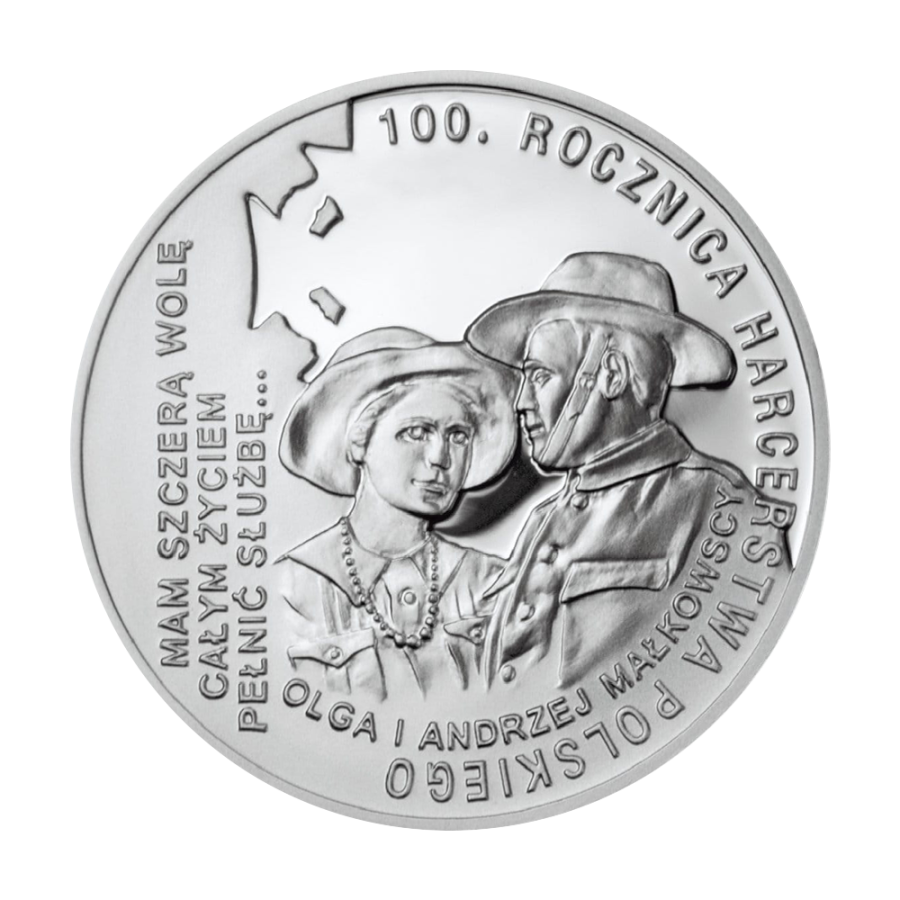
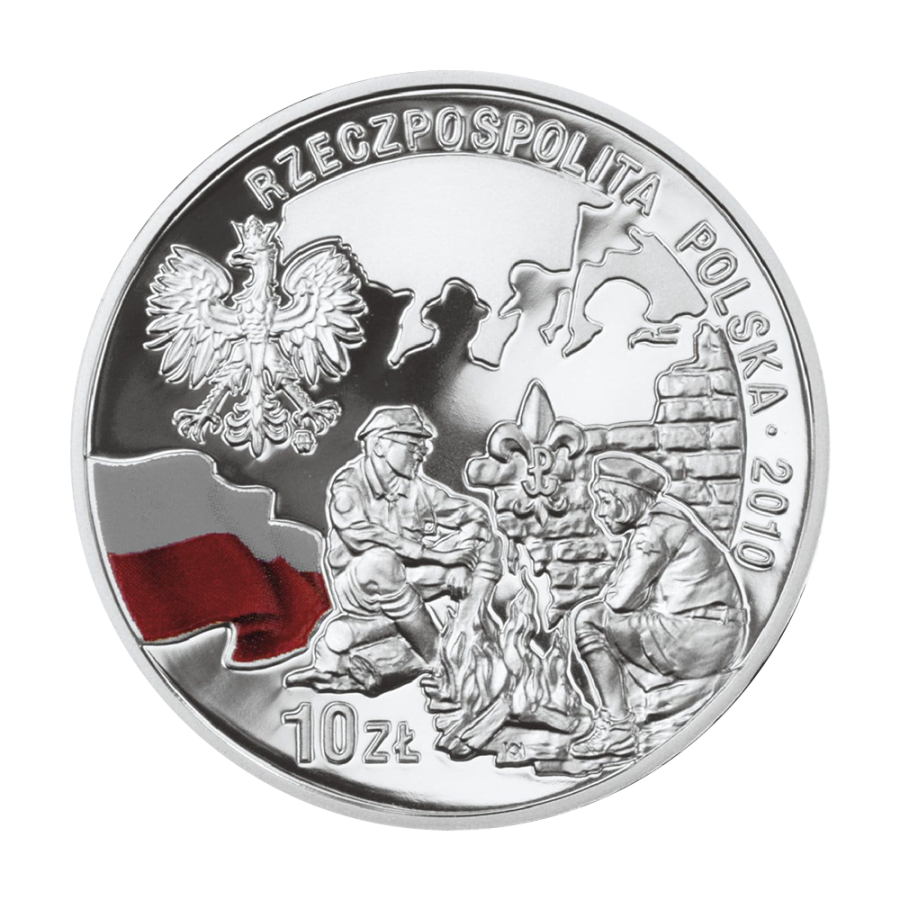
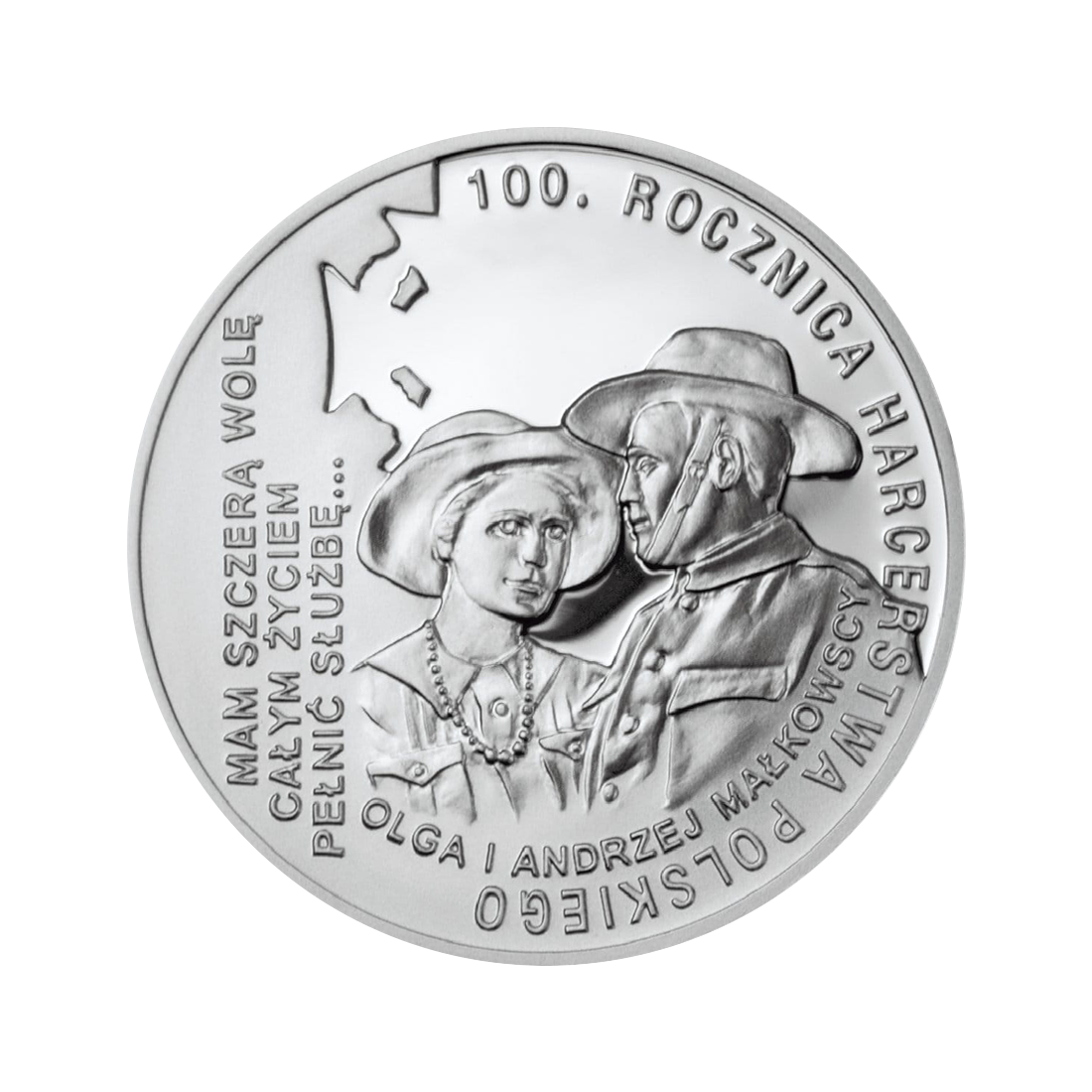
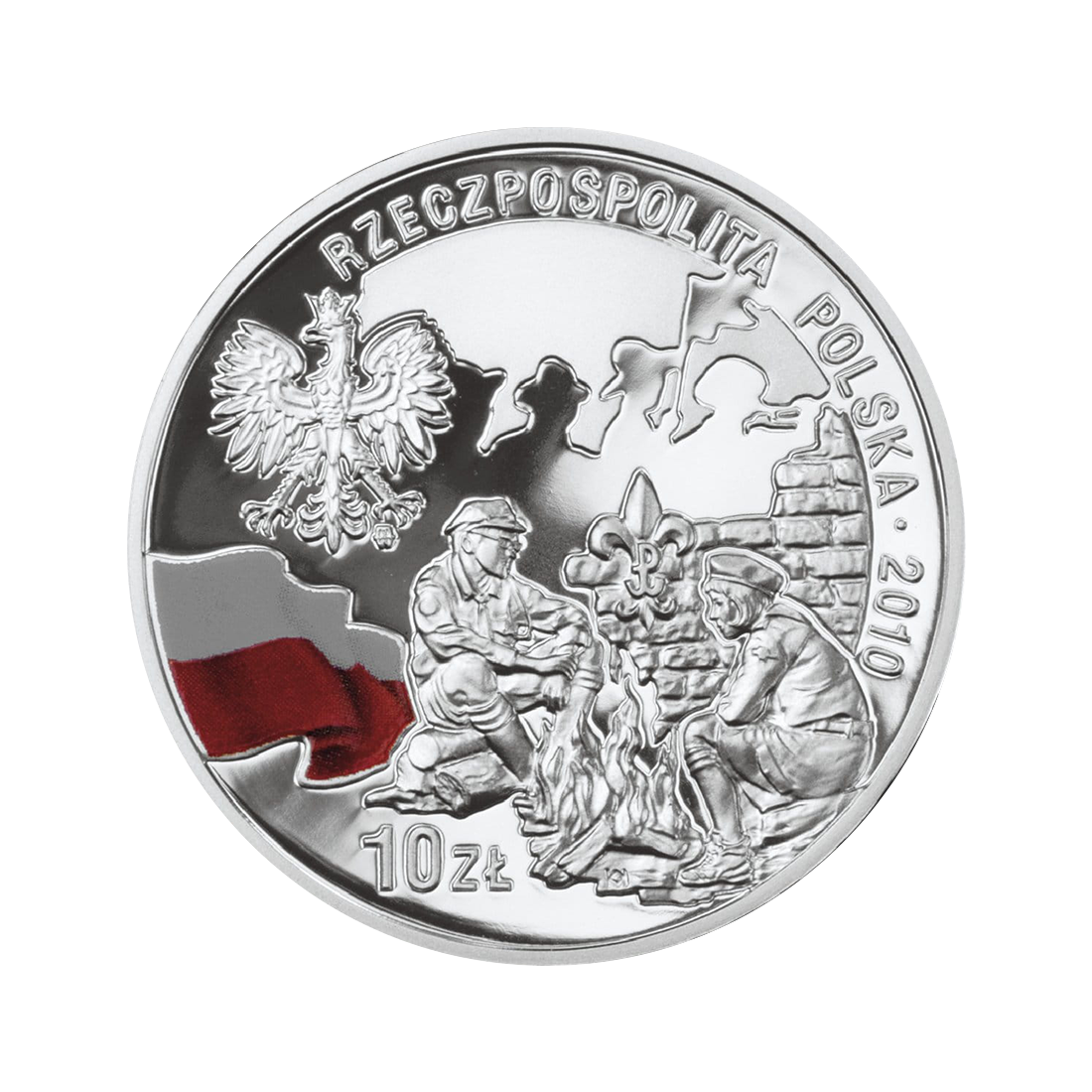
The overall design of the coin is based on a rich, narrative composition on both sides, combining symbolic and figurative elements that refer to the history and ideas of scouting in Poland. The reverse side features stylized portraits of Olga and Andrzej Małkowski, key figures in the history of Polish scouting. The composition is complemented by a fragment of the Scout Cross, a clear reference to the values and identity of the scouting movement, as well as inscriptions referring to the motto of service. The obverse features a scene depicting a boy scout and a girl scout sitting by a campfire. This figurative composition is set against a background of a stylized scout lily with the Fighting Poland sign and a fragment of a wall. The Polish flag is placed on the left, further reinforcing the patriotic character. The whole design is characterized by a careful combination of figures, symbols, and inscriptions that create a coherent story about scouting ideas.
Historical overview
The scouting movement in Poland was born at the beginning of the 20th century, modeled on Robert Baden Powell's scouting. The first troops were formed in 1910, combining patriotic and civic education with field activities. Olga and Andrzej Małkowski played a key role in shaping Polish scouting, developing a youth training system based on independence, teamwork, and the development of moral qualities. In the interwar period, scouting became an important part of social life, engaging young people in various forms of social and patriotic activities. During World War II, scouts actively participated in the underground, forming the Grey Ranks and supporting the activities of the Home Army, helping the civilian population and fighting for Poland's independence. After the war, scouting survived in modified forms, adapting to the political realities. In free Poland, it was reborn as an independent movement, continuing its educational and patriotic traditions. Throughout its existence, it has remained a symbol of responsibility, self-development, and service to the community, shaping young generations in the spirit of civic and national values.








 (1)_LBMA.jpg)



 English
 German
 Ukrainian


 801 501 521