Description of the silver coin Poland's Road to Freedom: 40th Anniversary of March 1968
This is the ninth coin in the "Poland's Road to Freedom" series. The coin was issued as a tribute to the student demonstrations that took place in March 1968. This numismatic work serves to commemorate important moments in history, showing both the unity and tensions present in society during those exceptional protests.
Appearance of the silver coin Poland's Road to Freedom: 40th Anniversary of March 1968
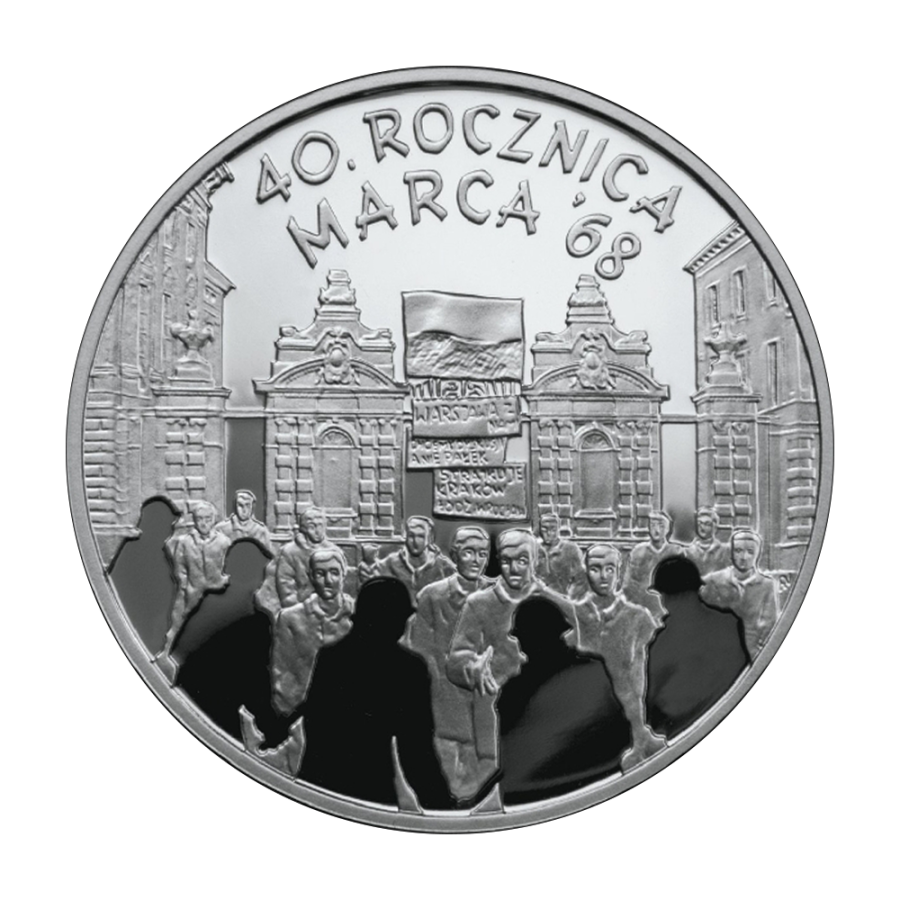
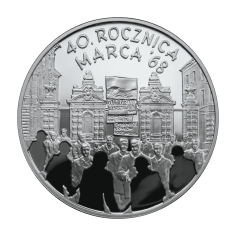
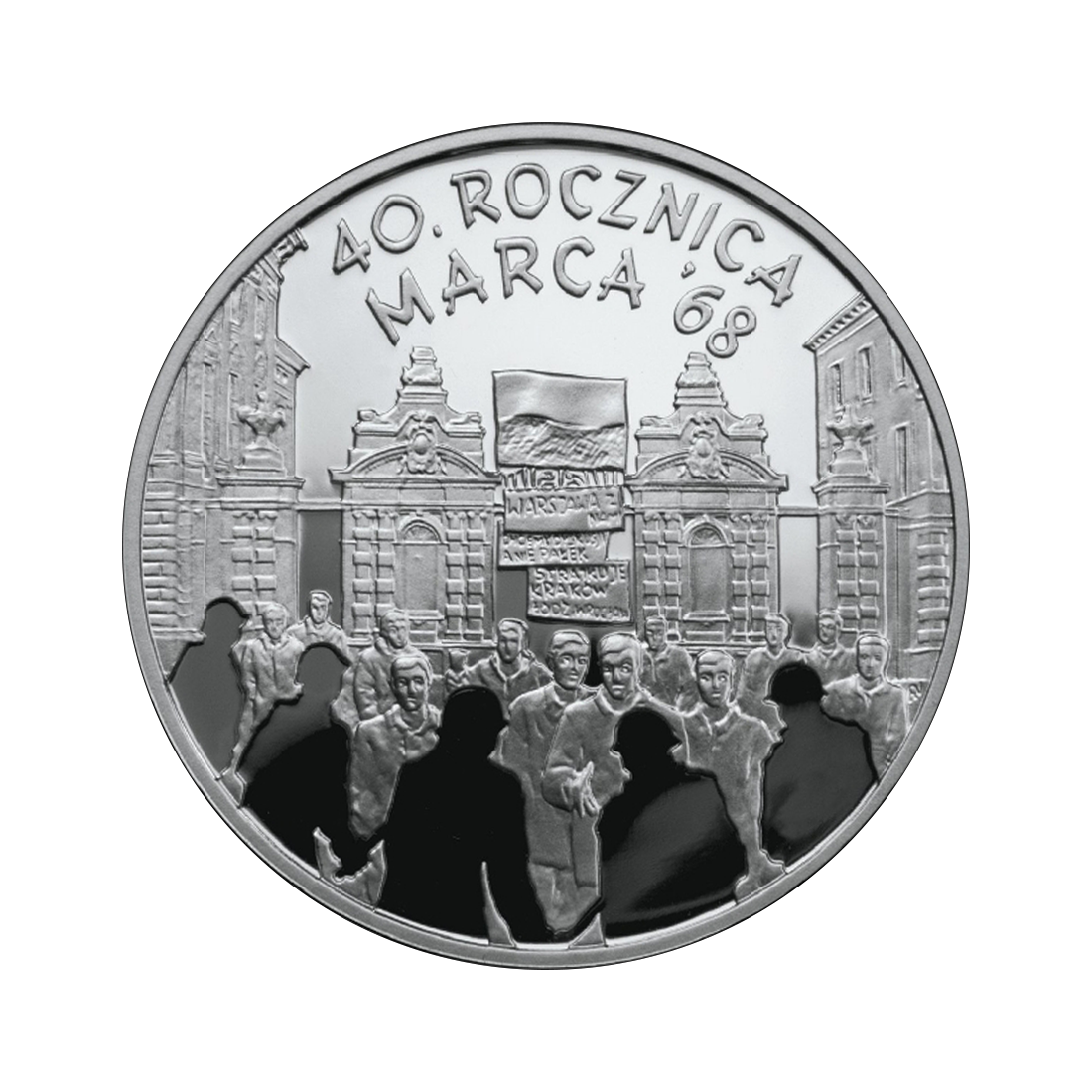
The reverse depicts the iconic main gate of the University of Warsaw, below which is a flag symbolizing the national colors of Poland, along with banners. At the bottom of the coin are figures of militiamen and striking students, symbolically representing the dramatic events of that period. At the top, there is a semicircular inscription: 40TH ANNIVERSARY/MARCH '68.
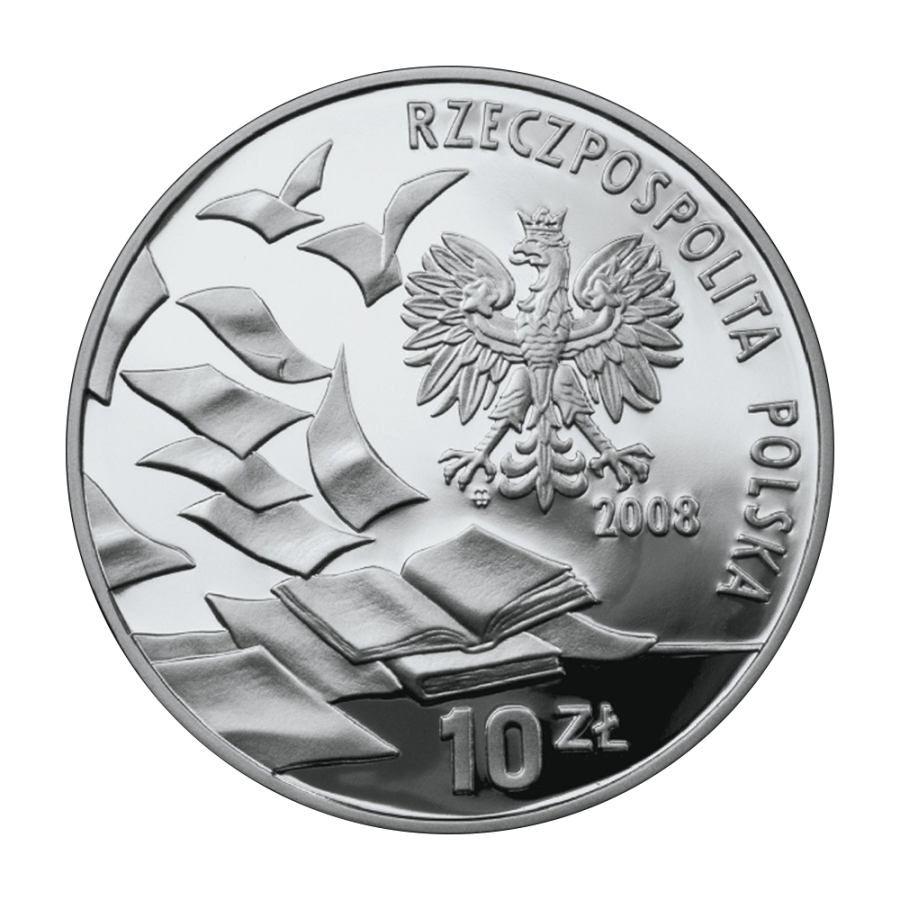
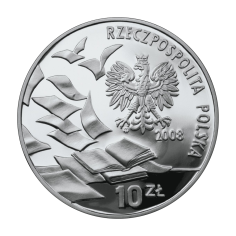
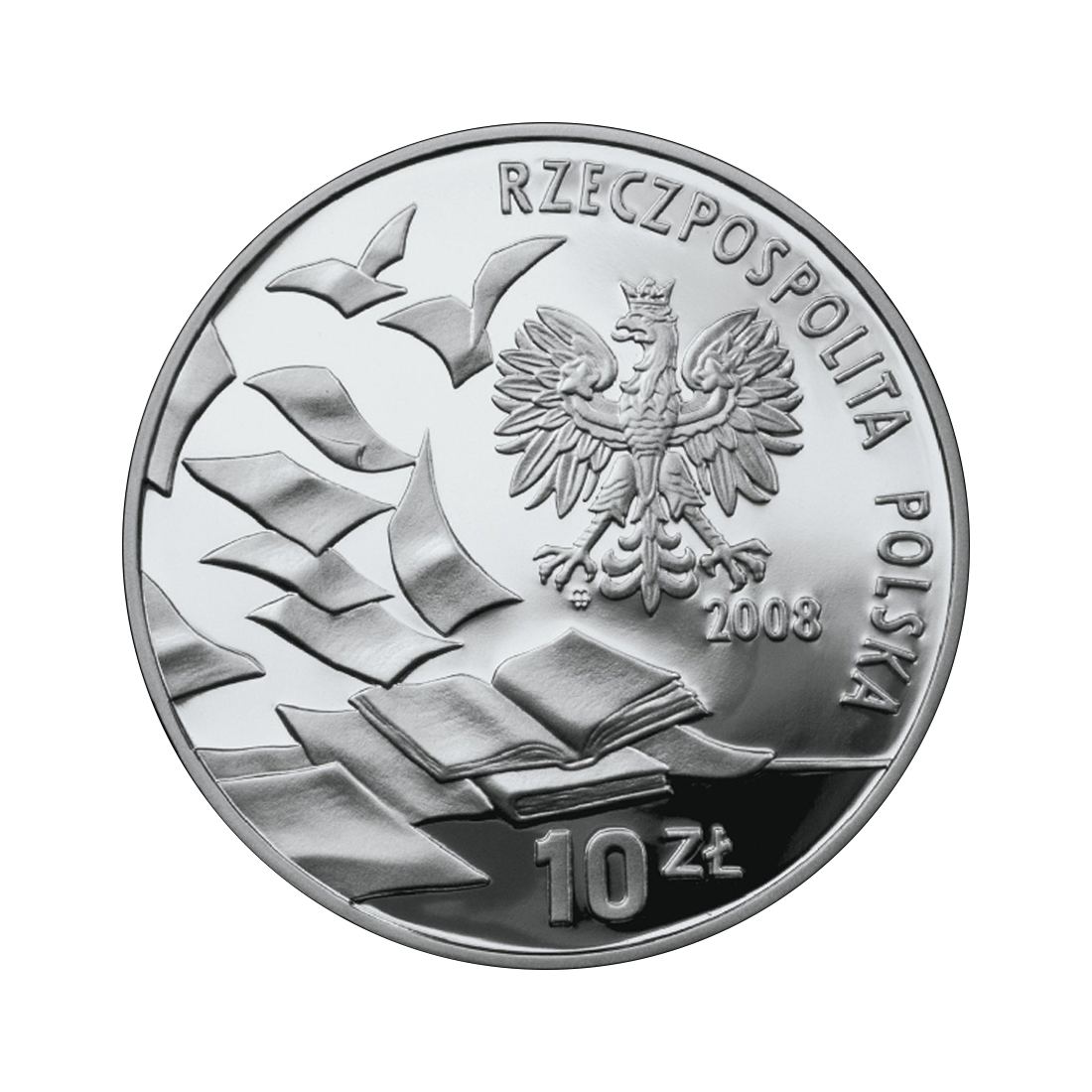
On the obverse, at the top right, there is a semicircular emblem with the inscription RZECZPOSPOLITA POLSKA (Republic of Poland). Below the eagle is the year of issue: 2008. The lower part of the coin features images of an open and closed book. This numismatic masterpiece meticulously captures the diversity of symbols and details, making it not only a collector's item, but also a unique record of Poland's cultural heritage.
Historical overview
March 1968, also known as "March '68," was a period of socio-political protests and riots that took place mainly in Poland, but also in other countries of Central and Eastern Europe. The event was part of a broader social movement that included dissatisfaction with the communist regime, the pursuit of civil liberties, and opposition to Soviet domination. In Poland, the events began in Warsaw at the University of Warsaw, where students demanded greater academic freedom and expressed their dissatisfaction with censorship and restrictions on freedom of speech. The demonstrations began to gain momentum, and the student protests quickly turned into mass social demonstrations involving various social groups, not just students. In response to the growing tension, the communist government resorted to repression, which led to arrests, dismissals from work, and restrictions on civil liberties. Although the protests were suppressed, they left a lasting mark on the national memory, and the events of March 1968 are considered one of the most important moments in Poland's recent history, symbolizing the struggle for freedom and civil rights.
Manufacturer
The history of the Polish Mint is long and turbulent. It dates back to the monetary reform carried out by King Stanisław August Poniatowski in 1766. At that time, still known as the Warsaw Mint, it began its operations, and in commemoration of these events, February 10 was established as a minting holiday – Minters' Day.
After events related to, among other things, the partitions and the Duchy of Warsaw, the mint resumed operations in 1924 as the State Mint, and modern machinery was imported from France, Great Britain, and Germany. During World War II and the occupation, it was partially destroyed and its collections were looted by the German army. After the war, until 1964, the mint minted over 1.84 billion zlotys, which is almost as much as was produced from the beginning of 1766 to 1944.
In 1994, the mint was transformed into a sole proprietorship of the State Treasury, and in 2005, the company's name was changed to its current one: Mennica Polska Spółka Akcyjna.
It is currently recognized as one of the most technologically advanced mints in the world and is a leading producer of coins and numismatic items in Poland and Europe. It has been listed on the Stock Exchange since 1998. It is the only mint to strike investment, collector, and commemorative coins on behalf of the National Bank of Poland. It also produces circulation coins for the Dominican Republic, Armenia, and Ukraine, as well as collector coins for Armenia, Belarus, Ukraine, and Cyprus.
The Polish Mint is also the exclusive manufacturer of Polish official seals bearing the national emblem, as well as Polish seals for sworn translators.


 (1)_LBMA.jpg)







 English
 German
 Ukrainian


 801 501 521