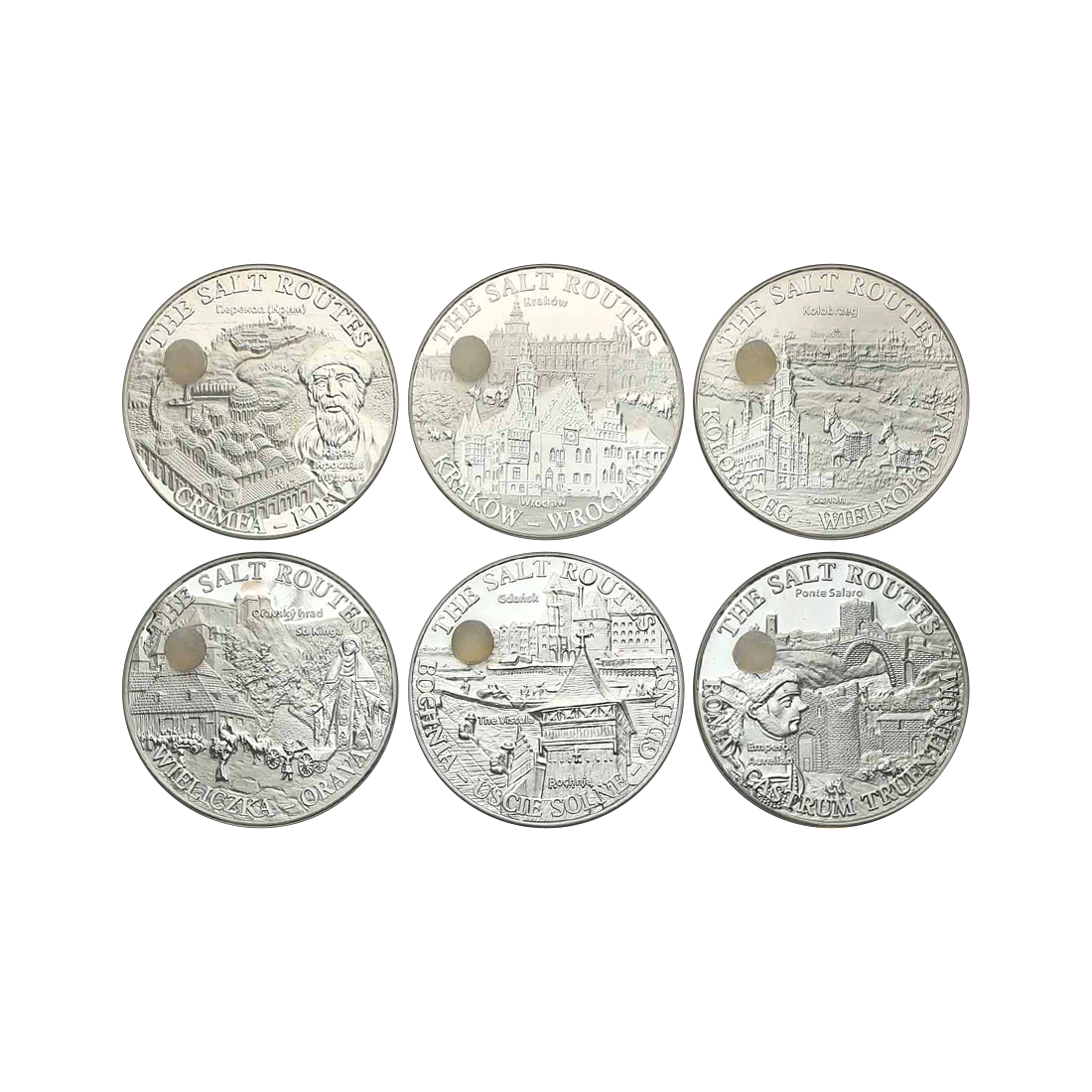
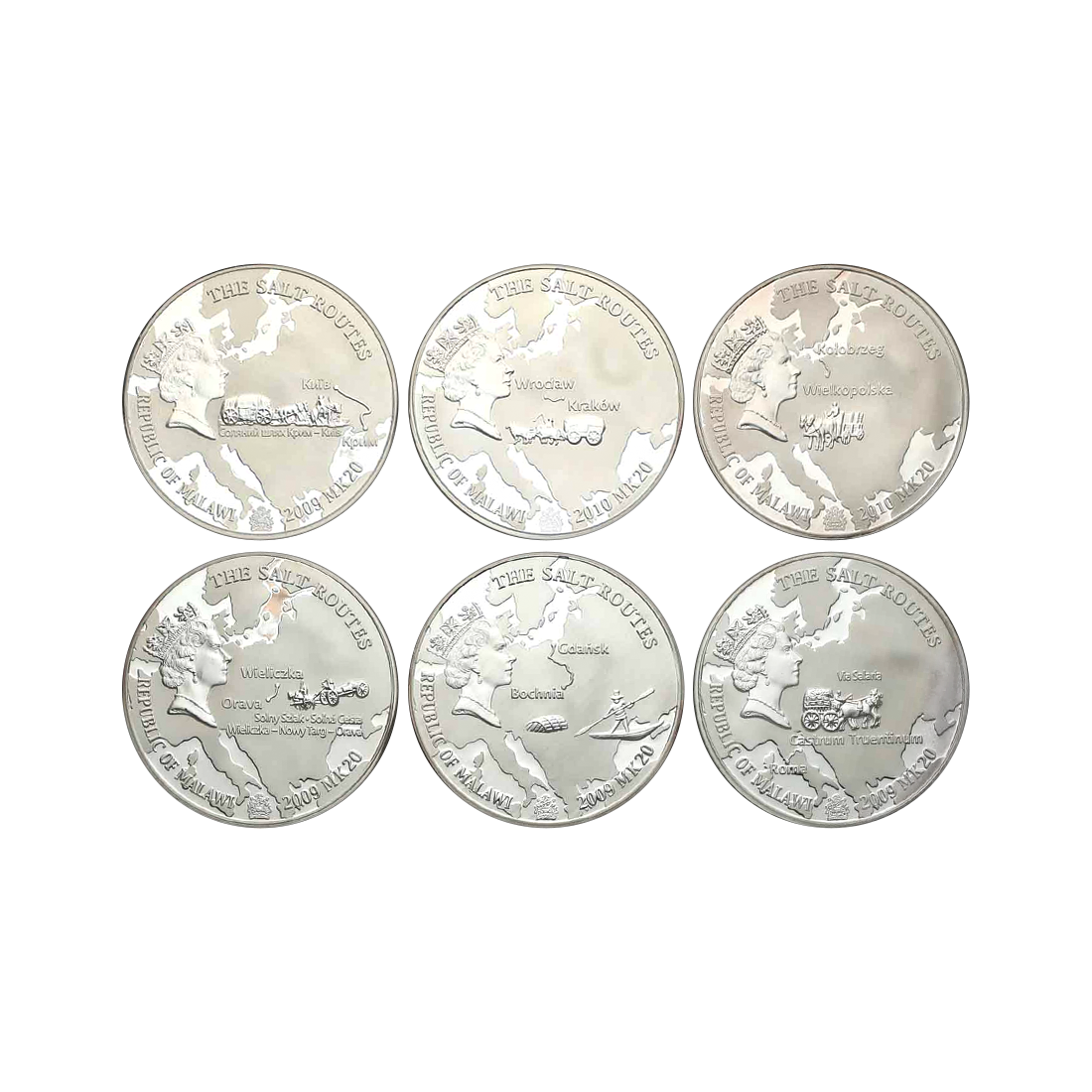
Product description
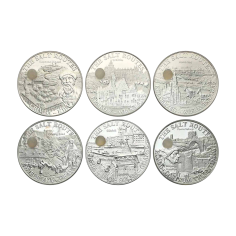
This coin set is a collection inspired by historical trade routes, which for centuries played a vital role in the development of civilization, cultural exchange, and the economy. The theme of the issue refers to the salt trade—a raw material considered in ancient times to be one of the most valuable commodities, of immense economic and social importance. The design was created for collectors interested in world history, ancient trade routes, and numismatic items with a rich historical narrative. Each coin constitutes a separate part of a larger story concerning travel, trade, and intercultural contacts, thanks to which the set serves both a collectible and educational purpose. The entire set is distinguished by its prestigious character and the meticulous craftsmanship typical of proof issues, which underscores the decorative and collectible value of the set.
Appearance of the set
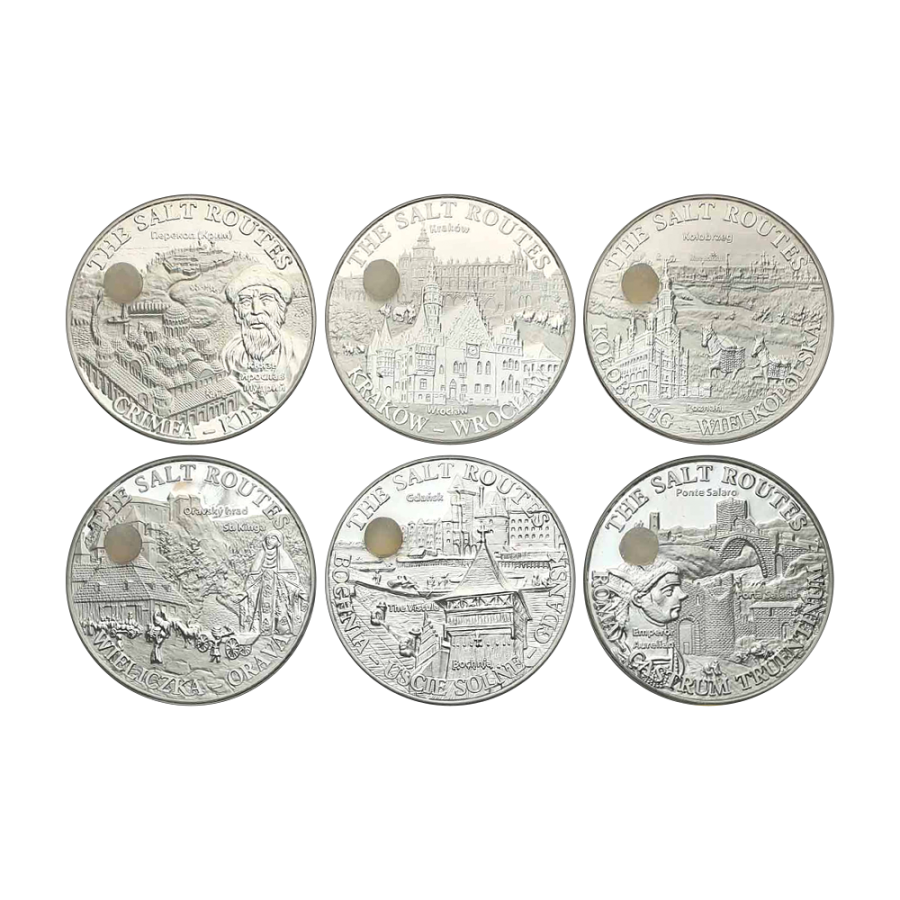
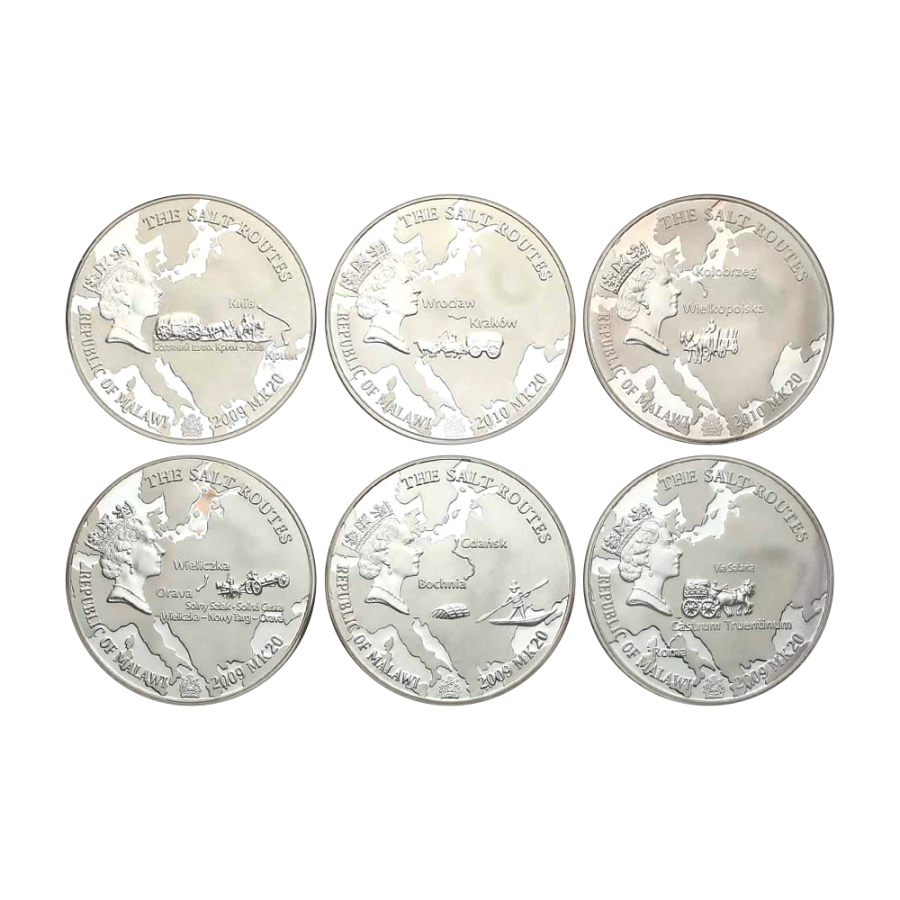
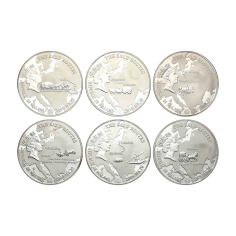
The collection features a design aesthetic inspired by ancient trade routes and the cultures that flourished along these historic pathways of commerce. Each coin depicts a distinct narrative scene, yet all elements of the collection maintain a consistent artistic and historical character. The reverses feature motifs related to salt transport, ancient merchants, architecture, and symbols characteristic of regions located along historic trade routes. The reliefs were designed with great attention to detail, highlighting elements of clothing, modes of transportation, and surroundings that evoke the atmosphere of bygone eras. The obverses are designed in a more orderly and formal style. They feature the issuer’s coat of arms and identifying inscriptions referring to Malawi—the country of issue, the denomination, and the coins’ specifications. This side serves a formal function, balancing the visually rich character of the reverses and giving the entire collection a classic numismatic appearance.
Historical overview
The Salt Trail series draws on historical trade routes that played a key role in the development of cities, countries, and entire regions of Europe for hundreds of years. In the Middle Ages and the modern era, salt was one of the most valuable commodities, often referred to as “white gold.” It was used not only to season food but primarily to preserve it, making it a strategic commodity for trade and the functioning of societies.
Important economic centers developed around salt mining and transportation, and trade routes connecting mines, ports, and merchant cities contributed to the growing prosperity of many regions in Europe. Of particular importance were, among others, Wieliczka and Bochnia—some of the oldest and most famous salt mines in Europe—as well as the Hanseatic cities and the southern trade routes running across the continent.
The coins in this series commemorate these historic trade links and the importance of salt to the development of European civilization. The series combines economic, historical, and cultural themes, serving as a reminder of the ancient trade routes that shaped the development of cities, transportation networks, and exchanges between nations over the centuries.
Manufacturer
The history of the Polish Mint is long and turbulent. It dates back to the monetary reform carried out by King Stanisław August Poniatowski in 1766. At that time, still known as the Warsaw Mint, it began its operations, and in commemoration of these events, February 10 was established as a minting holiday – Minters' Day.
After events related to, among other things, the partitions and the Duchy of Warsaw, the mint resumed operations in 1924 as the State Mint, and modern machinery was imported from France, Great Britain, and Germany. During World War II and the occupation, it was partially destroyed and its collections were looted by the German army. After the war, until 1964, the mint minted over 1.84 billion zlotys, which is almost as much as was produced from the beginning of 1766 to 1944.
In 1994, the mint was transformed into a sole proprietorship of the State Treasury, and in 2005, the company's name was changed to its current one: Mennica Polska Spółka Akcyjna.
It is currently recognized as one of the most technologically advanced mints in the world and is a leading producer of coins and numismatic items in Poland and Europe. It has been listed on the Stock Exchange since 1998. It is the only mint to strike investment, collector, and commemorative coins on behalf of the National Bank of Poland. It also produces circulation coins for the Dominican Republic, Armenia, and Ukraine, as well as collector coins for Armenia, Belarus, Ukraine, and Cyprus.
The Polish Mint is also the exclusive manufacturer of Polish official seals bearing the national emblem, as well as Polish seals for sworn translators.








 (1)_LBMA.jpg)



 English
 German
 Ukrainian


 801 501 521