Description of the 200 złoty gold coin, September 1939.
The coin was created as a symbolic expression of remembrance of one of the most dramatic moments in Polish history – Germany's invasion of the Republic of Poland and the start of World War II. It commemorates not only the beginning of the tragic conflict, but also the heroism, determination, and sacrifice of Polish soldiers and civilians who resisted despite the enemy's overwhelming superiority. The issue of this coin is part of the mission of the Mint of Poland, which aims to cultivate national identity and recall the events that shaped modern Poland. Its value is not limited to precious metal – it is above all an expression of respect for history and the memory of the generation that was the first to face the criminal regimes of the 20th century. The coin is dedicated to collectors, history enthusiasts, and those who value numismatics as a vehicle for national memory.
Appearance of the 200 złoty gold coin, September 1939.
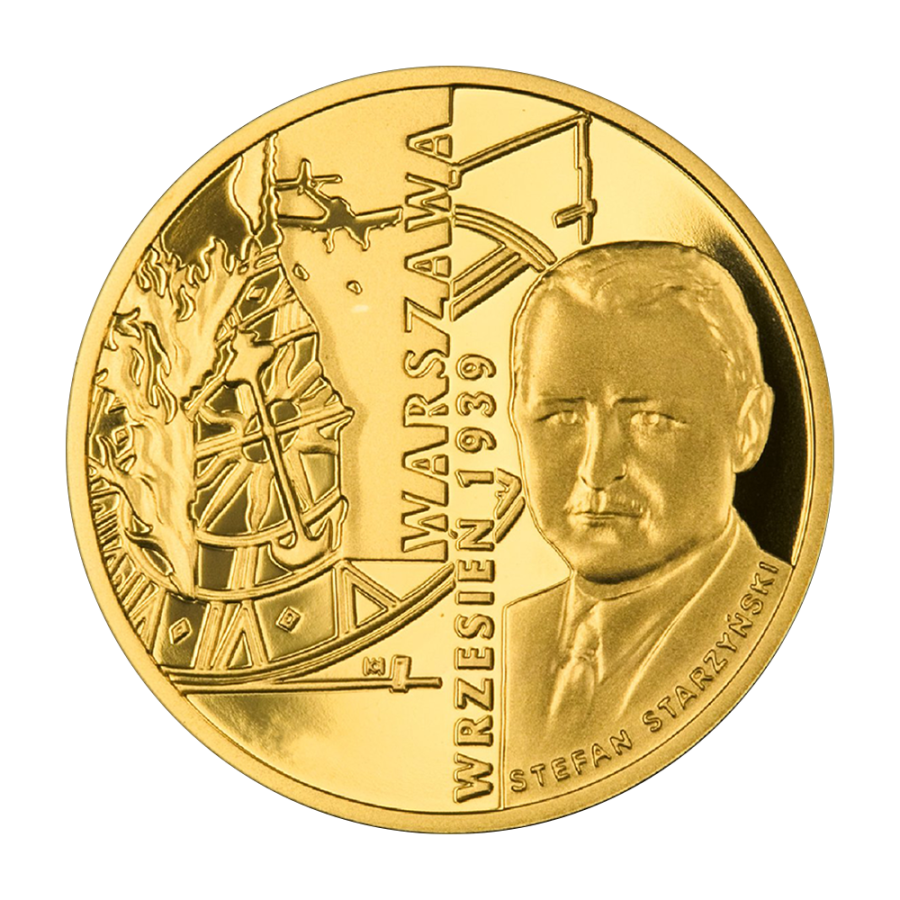
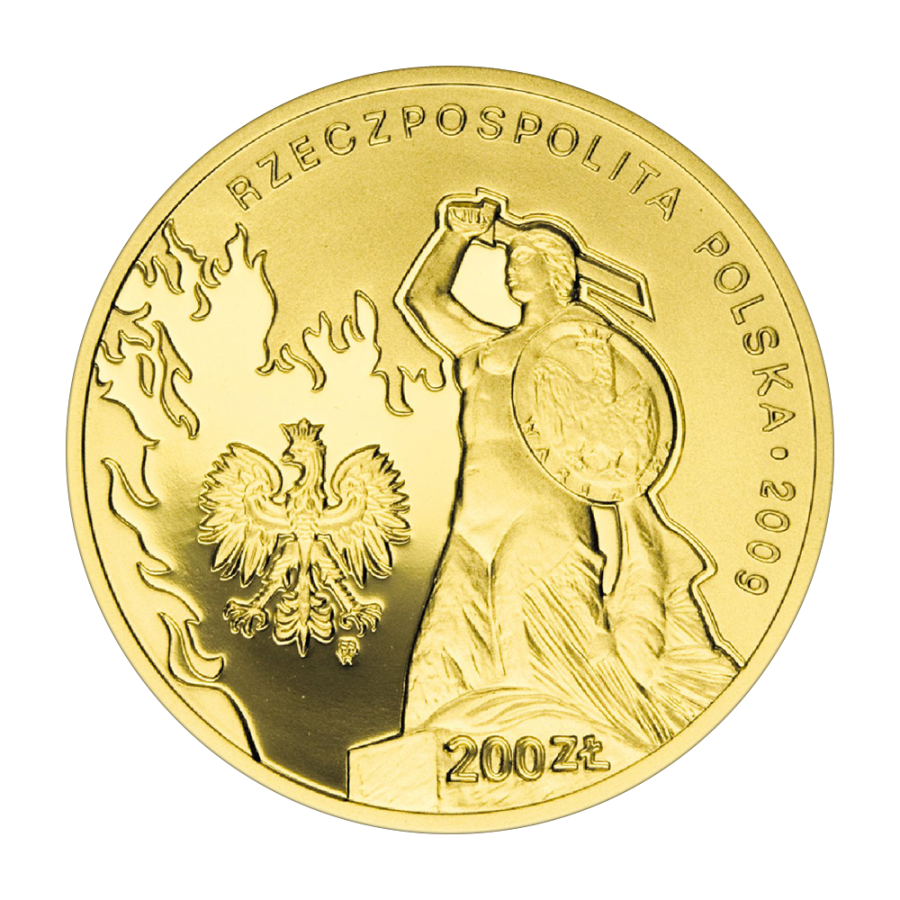
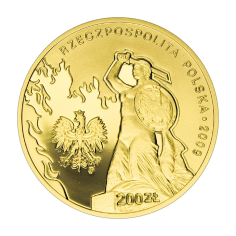
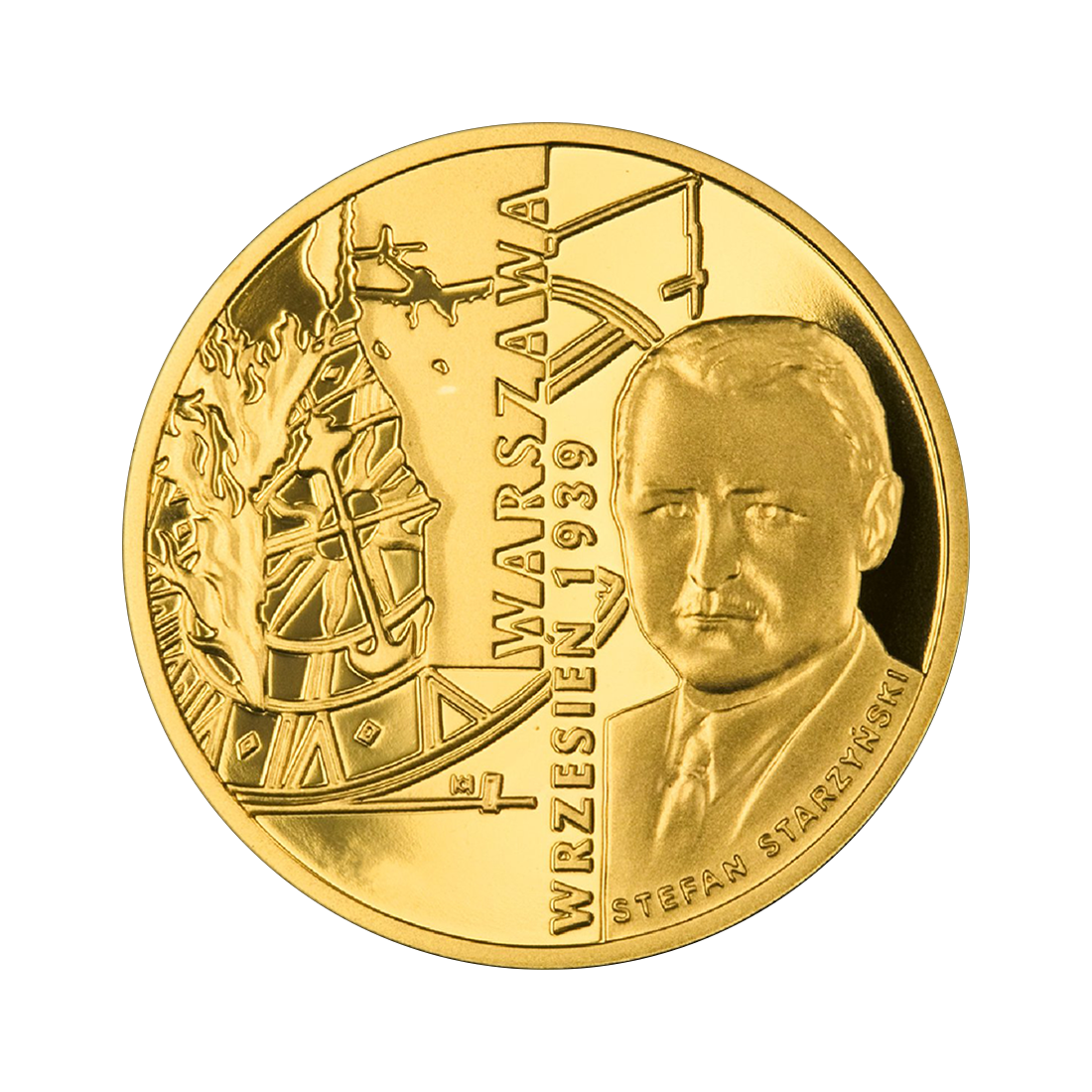
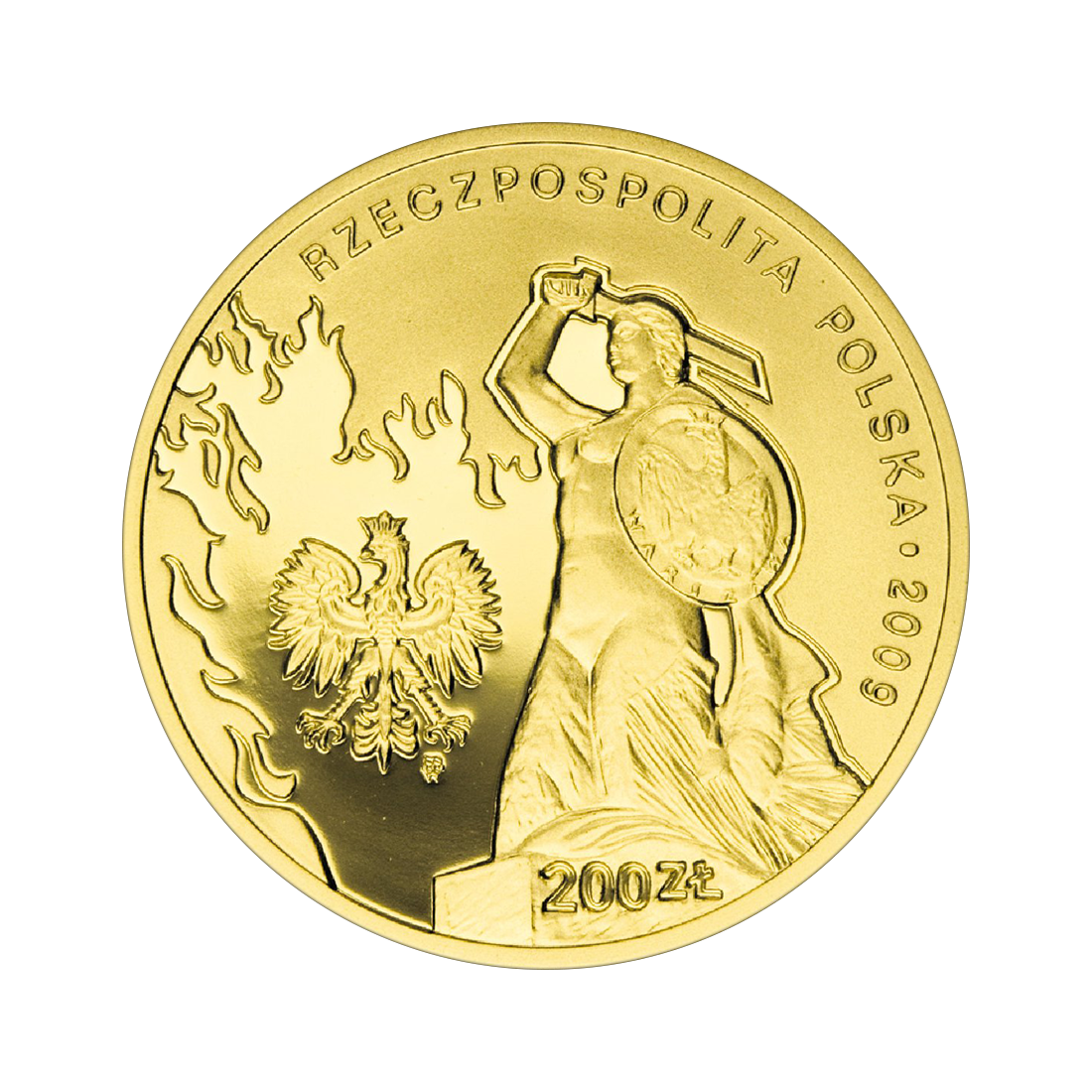
The graphic design combines symbolism with a strong emotional charge, showing both the tragedy of war and the heroism of its participants. The reverse of the coin shows the burning Clock Tower of the Royal Castle in Warsaw. Above this scene, an airplane can be seen dropping bombs – a clear reference to the German air raids during the siege of Warsaw in September 1939. The central vertical inscription WARSZAWA WRZESIEŃ 1939 (Warsaw September 1939) completes the historical message. On the right-hand side is an image of Stefan Starzyński, the president of the capital and a symbol of steadfastness in the face of aggression. His name appears in a semicircular inscription below the bust. The obverse of the coin is symbolic in tone. On the left is an image of an eagle, the emblem of the Republic of Poland, against a background of flames reminiscent of the conflagration of war. On the right is a monument to the Warsaw Mermaid, a symbol of the city that became the embodiment of resistance and courage. At the top, along the edge, is the inscription RZECZPOSPOLITA POLSKA (Republic of Poland) and the year of issue, while at the bottom is the coin's denomination. The entire composition evokes the atmosphere of the tragic but heroic days of the defense of Warsaw.
Historical overview
The gold coin, issued by the Mint of Poland in 2009, was created as part of the History of Poland series as a tribute to the heroism of Warsaw and its inhabitants during the September 1939 campaign. A special figure honored in this issue is Stefan Starzyński, the mayor of the capital, who became a symbol of steadfastness, courage, and patriotism in the face of German aggression.
The coin commemorates the dramatic days of Warsaw's defense, which began after Germany's invasion of Poland on September 1, 1939. Although surrounded and heavily bombed, the city put up fierce resistance throughout almost the entire month of September. Starzyński played a central role at that time, organizing the civilian defense, sustaining the fighting spirit, and remaining with the capital until the very end of its siege. His attitude went down in history as an example of uncompromising public service.
The issue of this coin was intended not only to commemorate the dramatic events of the beginning of World War II, but also to honor Stefan Starzyński as one of the most outstanding defenders of the Polish capital and a symbol of civic courage. The coin is a tribute to the steadfastness of the people of Warsaw and their president – people who did not give up despite the overwhelming forces of the enemy.
The coin was issued by the National Bank of Poland (NBP), which is responsible for issuing currency in Poland. The NBP regularly puts into circulation both circulation coins and collector and commemorative coins commemorating important events, anniversaries, and historical figures.



 (1)_LBMA.jpg)








 English
 German
 Ukrainian


 801 501 521