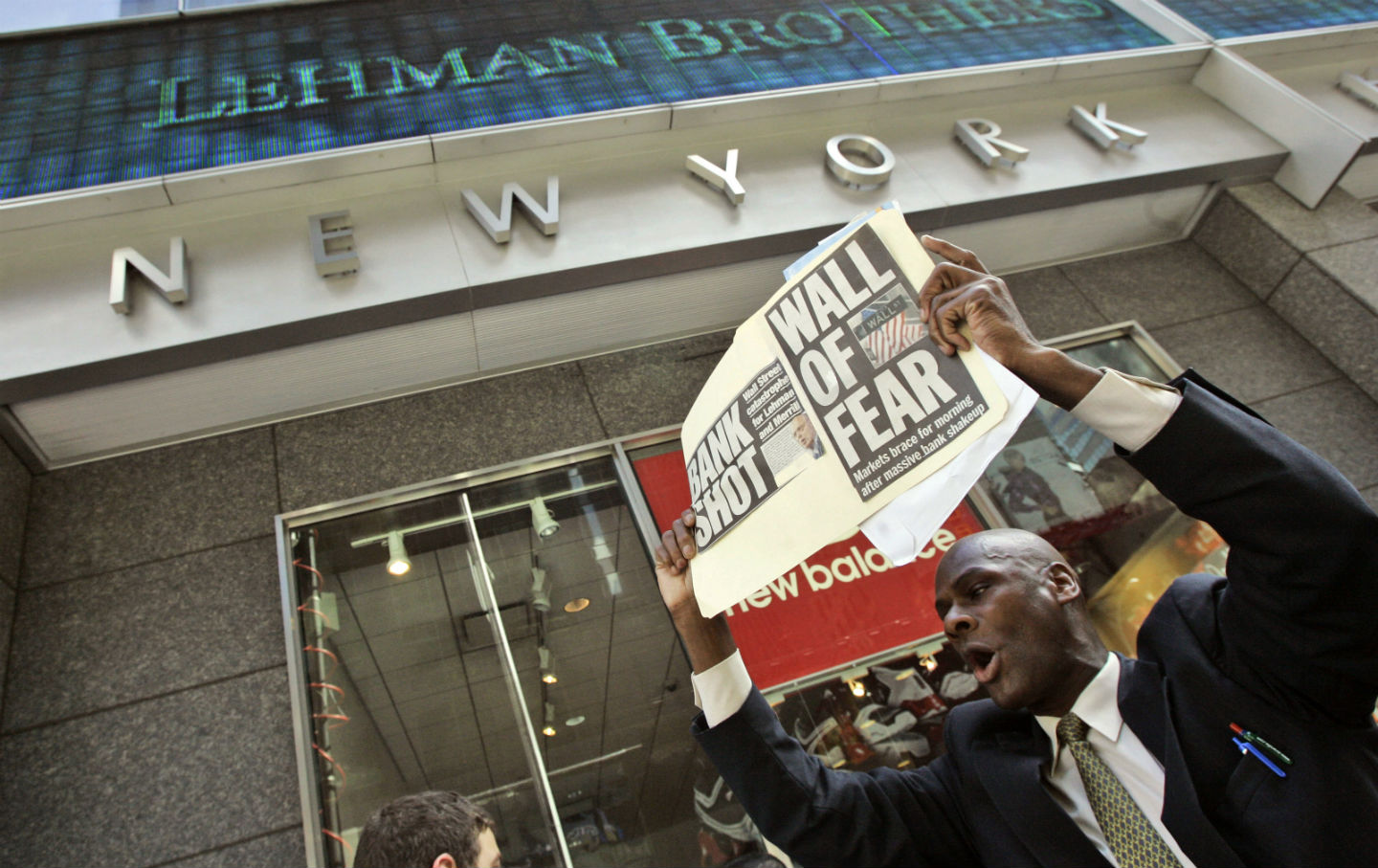
In many parts of the world, the coronavirus pandemic seems to be receding (at least for now). Countries are engaged in a race reminiscent of the Cold War (Star Wars), but the goal is not space, but something much more down-to-earth—a vaccine for COVID-19. Equally, governments around the world are searching for a miracle cure that will make the convulsions associated with lockdown as painless as possible for the economy. Today, the headlines of newspapers, websites, and major news outlets are announcing that we are facing a huge crisis and recession unlike anything anyone has ever seen before. In view of this, it is worth acquiring knowledge that will allow us to better understand the financial crisis.
That is why today we have decided to recommend a few books that more or less literally discuss the economic crisis, the mechanisms governing financial markets, and everything that is often the "hidden truth" in the history of crises that have affected humanity over the centuries. In retrospect, it turns out that the theories of the fathers of economics are not just the pipe dreams of eminent figures from centuries ago. We need to find a bridge between economics and culture, history, and what scholars would call the social foundation.
Adam Smith – The Wealth of Nations
Adam Smith is still considered one of the fathers of classical economics. His theories are still applicable in the modern world. In 1776, he published a book that was the first to be devoted entirely to political economy. The recommended publication is accompanied by a commentary that points to the direct correlations between Smith's theory and contemporary issues related to macro- and microeconomics. There we find answers to many pressing questions related to the contemporary economy, business, and financial mechanisms. Thanks to this publication, we will learn, among other things, why forward thinking is so important, why the lottery cannot be a substitute for economic strategy, and why employees should be well compensated. Smith's theories refer to free trade, economic circulation, and state perfectionism. The book allows us to build our own cause-and-effect chain, which will not only contribute to a broader understanding of the world of economics, but will also allow us to understand the mechanisms that can lead to a crisis. The publication is considered the most influential book of all time.
Niall Ferguson – The Ascent of Money: A Financial History of the World
Ferguson is one of the most famous historians in the world. In his publication, he shows the sad face of the modern economy, pointing out that behind every historical event there is a mystery related to the financial market. Ferguson does not shy away from numerous examples. He tries to explain what was behind the French Revolution and answers the question of why Argentina, once one of the ten richest countries in the world, sank into crushing inflation that led to its bankruptcy. There is no shortage of examples here. The author proves that the evolution we observe in financial markets is as important as technological progress, inventions, or civilizational leaps in general. The publication allows each of us to understand the power of economics, while making us aware of how little we knew about the power and effectiveness of money. Ferguson builds a bridge between economic knowledge and historical knowledge, without forgetting culture and the history of civilization. The publication is considered one of the hundred most important books of our time.
Nassim Nicholas Taleb – The Black Swan How unpredictable events rule our lives
Tabel is a world-renowned American economist, philosopher, and trader of Lebanese origin. In his publication, he developed the theory of the black swan—a situation that, from a distance, we assess as predictable and something we can protect ourselves against. He became famous for the fact that a year before the 2008 crisis, his publication contained signs foreshadowing it. Today, many analysts believe that the coronavirus is another black swan of our times. The publication has been hailed as the most prophetic book of the 21st century. We wrote more about the black swan theory and the publication itself here.
Michael Lewis – The Big Short: Inside the Doomsday Machine
Lewis is considered an outstanding chronicler of our times, who depicts the reality surrounding us with a great sense of humor. The Big Short is the first documentary publication that describes the background to the financial crisis that shook the world in 2008. After reading the book, we learn that it did not begin at that time at all, and that the real crash had already taken place a year earlier. Lewis reveals the intricacies of the mysterious derivatives market, linked to bonds and mortgages, in an extremely engaging and intriguing way. The author skillfully describes the mechanism of destruction that led to the bursting of the so-called credit bubble. The book inspired the film of the same title, The Big Short.
There are many examples of publications on financial crises. However, not all of them reveal the mechanisms that govern the world of financial markets in a reasonably universal way. Especially today, when the global crisis is no longer just a pipe dream, it is worth reaching for the classics. After all, history shows that we must learn from our mistakes and keep a close eye on those in power. Political economy itself has been at the root of crises, wars, and the collapse of states and societies for centuries. We must learn to draw conclusions from the signals we receive in order to prepare for the "worst."












 (1)_LBMA.jpg)



 English
 German
 Ukrainian


 801 501 521