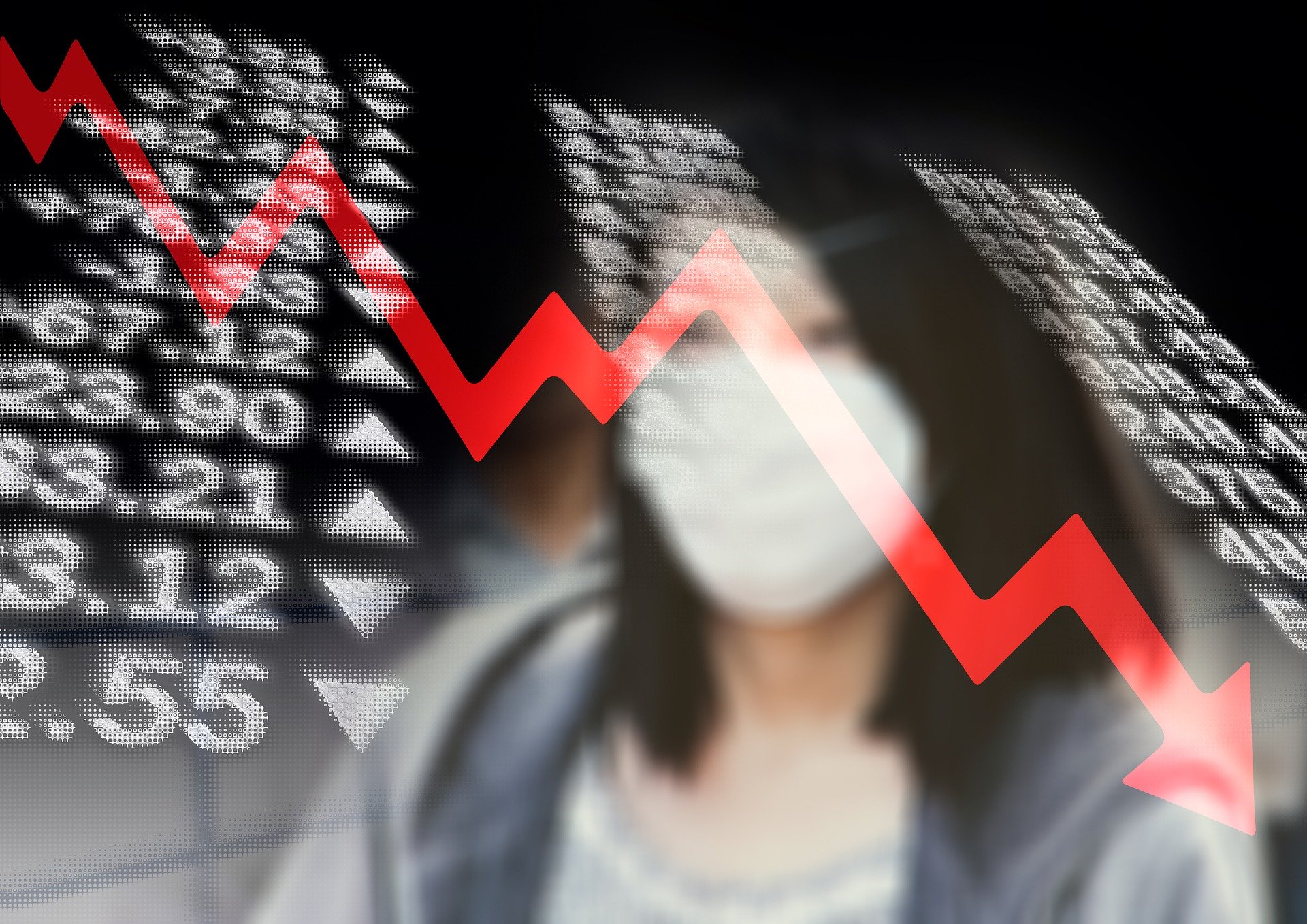
As soon as COVID-19 appeared outside China, the world began to slow down. Everything we have known so far as globalization in the broad sense can now be seen in the rearview mirrors of our cars. Individual countries began to introduce increasingly severe restrictions on civil liberties and the economy in order to save human lives. However, no thought was given to whether there would be enough ventilators for the biggest victim of the coronavirus – namely, the economy.
In 2007, Nassim Nicholas Taleb's book The Black Swan: How Unpredictable Events Rule Our Lives was published. In it, the author not only predicted the economic crisis that shook the world in 2008, but also coined the theory of the black swan. Today, we can apply this concept to the COVID-19 pandemic and the economic crisis it has caused.
Taleb's theory assumes that black swans are unpredictable events that will have a huge impact on our daily lives and the future of the human race. These events are particularly dangerous because we cannot predict them, which means we ignore the signs of impending danger. As a result, we live in the belief that there is no risk, when in fact we have simply downplayed it and failed to take its existence into account. According to the theory presented by Taleb, three basic conditions must be met for a black swan event to occur: the event must be unexpected (to the observer); it must have a significant impact on the environment; and after it occurs, it has an explanation and is considered to be predictable. It is difficult to resist the temptation to say that today's black swan is the coronavirus pandemic and the collapse of global markets.
The unpredictable can be predicted
Taleb's theory can be considered not only in relation to macroeconomic events (there are many examples of this, including September 11 and the attack on the World Trade Center). On a microeconomic scale, black swans are events that have a direct impact on our wallets, including our investment portfolios. An example of this microscopic approach would be the collapse of an airline or travel agency and the possibility of protecting oneself through various types of insurance in the event of such an occurrence. A black swan can also be an opportunity to achieve positive results from a given event. An example of this would be observing the market for raw materials, including precious metals and their prices (declines and increases), and sensing the optimal moment to invest or liquidate such an investment.
Black swan – an extraordinary discovery not only from Australia
For many years, Europeans believed that only white swans existed in the world. Until one day it was proven that the species also exists in black in Australia. The same is true of Taleb's achievements. He was born in 1960 in Lebanon, but today he is known worldwide as an American economist, philosopher, and trader. Although he has a master's degree in natural sciences and a doctorate in management. His book The Black Swan: How Unpredictable Events Rule Our Lives has been translated into 33 languages. In just four years after its publication, it sold over 3 million copies. After the 2008 crisis and the author's predictions on the subject in the book, it was considered the most prophetic publication of the 21st century. The British weekly The Times hailed The Black Swan as one of the twelve most important books published after World War II. When reading it, we get the impression that it is a collection of essays that are not devoid of elements of probability theory and philosophy, all of which are embellished with autobiographical threads. It gives us a completely different perspective on the issues that concern us, and above all, the world of investment.
From a very short-term perspective, even today, we can safely say that we could have been better prepared for the global COVID-19 pandemic. This would have required more serious measures to be taken to counteract the spread of the epidemic and its effects when the alarming news began to reach us from China. What will the world be like after the pandemic? Will this latest life lesson allow us to be more vigilant in observing what is happening around us? We cannot give a clear answer to these questions today. However, we encourage you to read the global bestseller by Nassim Nicholas Taleb, whose theory applies to the globalized world of the 21st century and to our own small backyards.




 (1)_LBMA.jpg)








 English
 German
 Ukrainian


 801 501 521