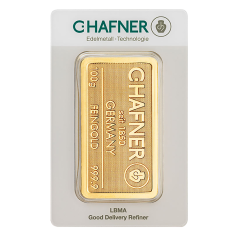
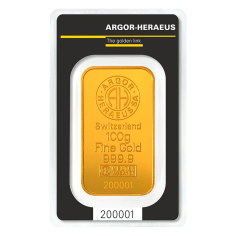
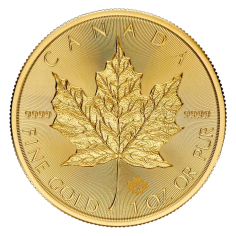
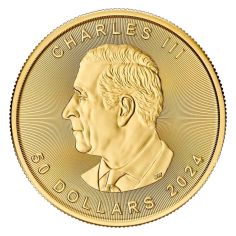
Gold gains value in times of inflation, economic and geopolitical uncertainty, and armed conflict. The financial crisis affecting the world will not be resolved for a long time, as the underlying problems are structural in nature. The money printing policy in the United States and Europe is not an effective way to combat these problems and will result in high inflation and even greater depression in the future. Therefore, in a situation of continuing loss of confidence in the banking system, gold remains the best response to the crisis.
Historical purchasing power ratios between various currencies and gold support this statement. Investors who bet on gold at the end of the nineteenth century had to wait almost thirty years, but during the hyperinflation of the 1920s, their investment rose well above its purchasing power at the time of purchase. At the same time, the German mark completely lost its value. A similar situation occurred in the case of investors who bought gold before World War II. The years 1979/1980 are another example.
There are, of course, several reasons not to buy gold, such as the lack of dividends and interest provided by other investments. At the same time, however, gold, due to its physical nature, is the safest form of investment and should always be included in our investment portfolio. Beloware a few reasons why we believe gold is an interesting investment:
GROWTH IN EMERGING ECONOMIES
- In recent years, growing demand in emerging economies has increased global demand for gold. This is particularly evident in Asia, where gold is the most valued means of storing wealth. Therefore, with economic development and population growth in emerging economies, demand for gold will continue to rise.
- The country that consumes the most gold in the world is India, where there has been strong demand for traditional gold jewelry for years. China ranks second, which is also the world's largest consumer of gold investment coins. In this country, the central bank also makes very large purchases of gold in order to become independent of foreign exchange reserves in dollars and euros. Russia and oil-exporting countries are doing the same.
PROBLEMS IN THE US AND THE EURO ZONE
- A weak dollar, large budget deficit, trade deficit, and massive public debt in the US may lead to increased demand for gold as a hedge against impending inflation and increasingly risky investments in US bonds.
Due to its monetary policy, the US economy is not actually emerging from recession, so "you need to dump dollars and invest in gold," according to Peter Schiff, chief strategist at Euro Pacific Capital, who predicted the 2008 real estate crisis. In his opinion, the dollar could lose as much as 50 to 70 percent of its value.
- The situation in the eurozone looks equally bad. After Greece and Cyprus, other countries are lining up to declare insolvency. If the problem affects one of the larger countries, such as Italy or Spain, it could cause a drama in the eurozone.
LOW GOLD SUPPLY
- The supply of gold is limited and amounts to approximately 2,800 tons per year. In addition, a significant portion of the world's available gold deposits has already been mined. Now, deeper deposits are being exploited and newer mining techniques are being used, which increases the cost of extraction.
- The remaining 1,600 tons of gold comes from recycling (largely from melted-down jewelry and electronics).
GOLD PURCHASES BY CENTRAL BANKS
- In recent years, gold has been bought up en masse by central banks around the world. Their purchases in 2012 were the largest in over 50 years, amounting to more than 500 tons. These figures do not include purchases by the Chinese central bank, which does not disclose information about its purchases to the public.
- The reason for such large purchases of gold by central banks is a partial loss of confidence in the world's most popular currencies and an attempt to hedge against the risk of excessive inflation.
- In addition, central banks are beginning to exchange less secure paper gold for physical gold bars. There is a risk that a large portion of paper gold is not backed by physical bullion. This is one of the reasons why the Bundesbank has called on the United States to return its 1,500 tons of physical gold.
INFLATION PROTECTION
- History shows that gold is an excellent hedge against inflation. Over a five-year period with the highest inflation rate in the US, the average real return on the Dow Jones Industrial Average was -12.33%, compared to 130.4% for gold.
- There is no doubt that gold is a good hedge against inflation thanks to its small physical size, its ability to retain its value as a medium of exchange, and its long and universal history as a currency.
DIVERSIFICATION OF THE INVESTMENT PORTFOLIO
- The key to success lies in the proper allocation of invested capital. Therefore, it is also important to focus on investments that are not correlated with stocks and other financial instruments.
- The history of gold has shown that stock and gold prices fluctuate independently of each other. Therefore, by adding gold to your investment portfolio, you can achieve higher returns with less risk.
- According to research by the World Gold Council, gold should account for between 5 and 20% of every investor's portfolio.












 (1)_LBMA.jpg)



 English
 German
 Ukrainian


 801 501 521