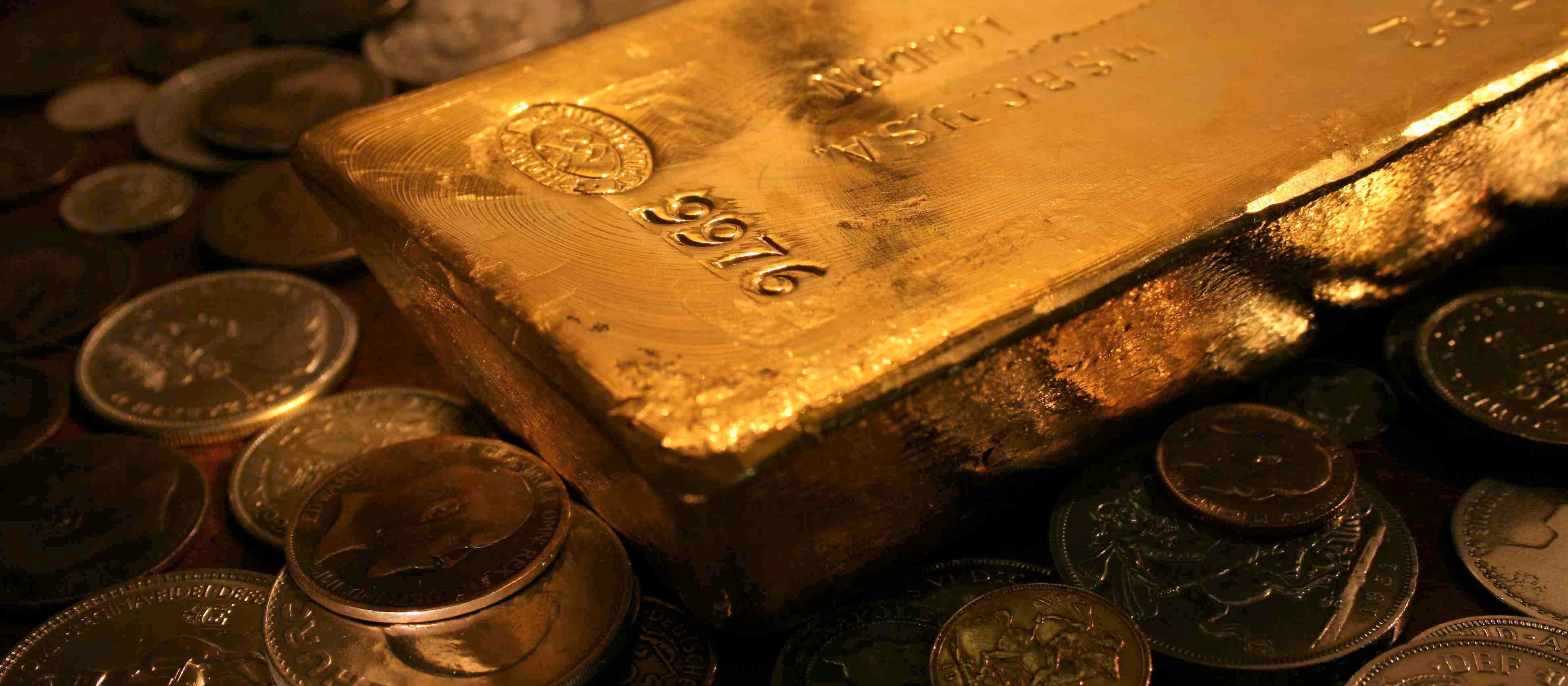
In recent years, there has been much talk about the intensive expansion of Russian gold reserves. Many people may associate this process with a photograph of Vladimir Putin holding a large gold bar in his hand. The photo was taken in January 2011, when Putin, then prime minister and now president, made an official visit to the main vault of the Central Bank of Russia in Moscow. At that time, Russia had reserves of approximately 836 tons. Today, they are more than twice as large. If we take a closer look at its history, it becomes clear that Putin's efforts to build up huge reserves are not a new strategy, but rather a return to 19th-century traditions.
THE GOLDEN POWER OF TSARIST RUSSIA
Tsarist Russia had the most gold in 1894, when its treasuries held reserves worth 800 million rubles at the time. Such large reserves allowed the Ministry of Finance to introduce the gold standard in 1897, a system in which each monetary unit corresponded to a predetermined amount of gold. Although gold began to slowly disappear from Russian treasuries in the following years, the Russian Empire remained the owner of the largest reserves in the world until 1914. Shortly before the outbreak of World War I, they weighed approximately 1,400 tons.
RESCUE FROM THE BOLSHEVIKS
The outbreak of war and the subsequent revolutionary period forced the tsarist government to take out loans from foreign banks, which further depleted its gold reserves. Just before the Bolshevik revolution, Tsar Nicholas II ordered some of the remaining gold to be transported to Kazan. According to Russian historians, it weighed over 600 tons. In 1918, the White Army transported it even further – to Siberia, where its commander, Admiral Alexander Kolchak, took control of the treasure.
The military commander, known for his extravagance, distributed part of the gold among himself, his family, and his subordinates. Another part went to the Japanese army, which in exchange for the precious metal undertook to supply the anti-communists with weapons. Ultimately, this never happened, and the Russians simply lost the gold. After an inventory carried out in May 1919, it came to light that only 500 tons of the tsar's gold remained in the White Army's treasury.
KOŁCZAK'S GOLD
When the Bolsheviks began to dangerously approach the areas occupied by Kolchak's army, the admiral decided to transport the gold by the Trans-Siberian Railway to Vladivostok. However, the journey took so long that by the time the "gold train" reached its destination, the Bolsheviks had further consolidated their power, and Kolchak was forced to relinquish power and, after a brief investigation, was shot. As a result, the valuable cargo was sent to Kazan, which was controlled by the Communists. When the new owners of the treasure conducted an inventory, it turned out that there was just over 300 tons in the transport. What happened to the remaining nearly 200 tons is unknown. Most likely, most of it "disappeared" before it was loaded onto the train. According to various sources, anywhere from a few to several dozen tons may have disappeared during the journey. The missing reserves are now referred to as "Kolchak's gold."
Based on: "Where are Russia’s vast gold reserves hidden?", www.rbth.com












 (1)_LBMA.jpg)



 English
 German
 Ukrainian


 801 501 521