Ten years have passed since the last financial crisis. As befits such a milestone anniversary, there have been many reminiscences and reflections in the Western media recently. Among them, analyses pointing to numerous analogies between the global economy today and in 2008 dominate. In recent days, another argument has been added to the mix – the ratio of the price of gold to the price of silver.
AGAINST MARKET LAWS
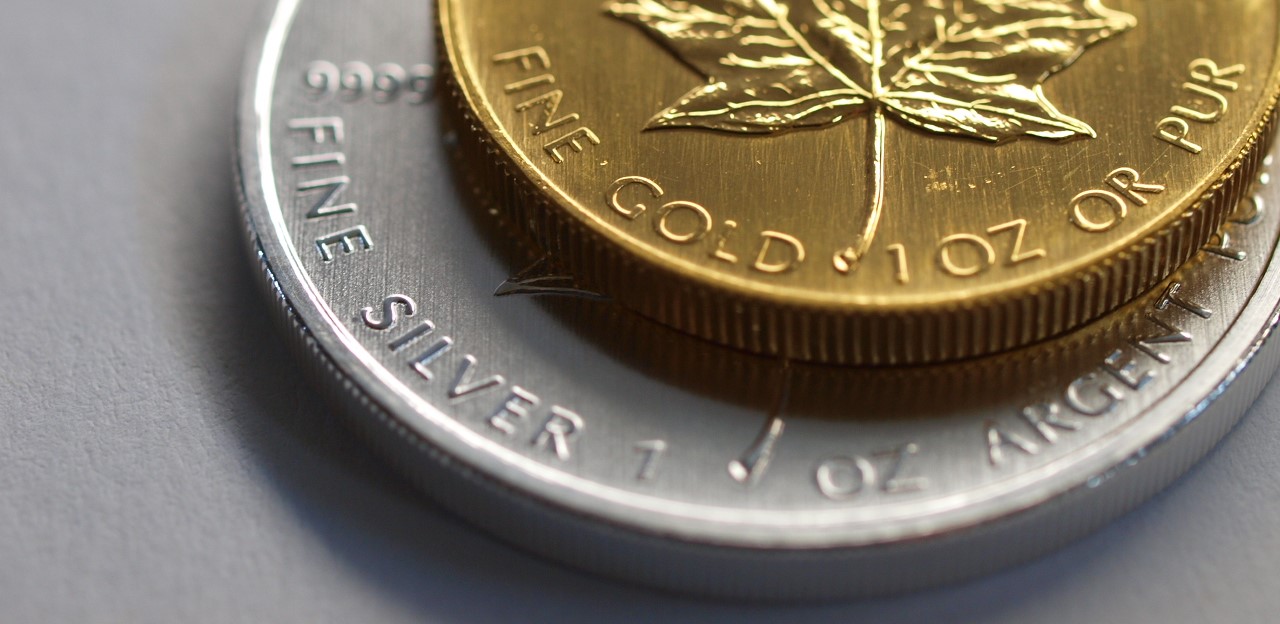
Silver can be called the metal of the future. This precious metal is used not only in jewelry, but also in the medical and technology industries, which are currently the fastest growing sectors. It is no surprise that, according to forecasts, demand for silver should continue to grow in the coming years, naturally driving up its price.
Meanwhile, the price of silver has been falling dramatically for some time. On Tuesday, it dropped to its lowest level in 2.5 years – approximately $14.15 per ounce. As a result, the ratio of the price of gold to the price of silver broke the previous record set in 1993 and exceeded 85.
As for the current century, almost the same level was reached shortly after the collapse of the Lehman Brothers investment bank, an event that symbolized the economic downturn in 2008. However, this is not the only situation where a record gold-to-silver parity accompanied a major recession.
HISTORY OF CRISES
The estimated ratio of gold to silver in the Earth's crust is 17.5. In the past, the valuation of metals roughly corresponded to their occurrence in nature. During the Roman Empire, the price parity was set at 12. This low level remained unchanged for many centuries. As late as 1792, US law maintained it at 15. In 1803, almost the same level was also introduced in France (15.5).
Parity began to rise dramatically in the 20th century – the average value for that period is around 50. The first significant impetus for the increase was the costs associated with World War I, which wreaked havoc on the US monetary system. The ratio of the price of gold to the price of silver fluctuated between 30 and 40 at that time.
However, the biggest jump was caused by the stock market crash of 1929. The Great Depression led to such a sharp decline in the price of silver that in 1932 the parity exceeded 80. After the devaluation of the dollar and the increase in the price of gold to USD 35 in 1934, the price ratio between the two metals settled at a slightly lower level. The historical record was reached in 1939 and amounted to 98.
After the end of World War II, the price of silver began to rise steadily. As a result, between 1963 and 1966, the parity remained at around 27. Then, between 1967 and 1970, its average value was 20.
The next jump occurred in the early 1990s, during the Gulf War. The ongoing recession and decline in industrial demand caused a drastic drop in silver prices and an increase in parity to as high as 93 (1990).
In the 21st century, this relationship has normalized somewhat, with the average for the last 20 years being around 60. The aforementioned period of recession was an exception.
WAITING FOR THE EXPLOSION
The record high parity between gold and silver means that silver is extremely undervalued. This situation cannot last forever, which is why in the past, a period of decline has always been followed by an explosion. An example of this is the recession in 2008, when the price of silver fell to $9.73 per ounce. After it ended, in April 2011, the price reached $49.82 per ounce. This means that in less than three years, investors in silver could earn over 500%. Many experts suggest that we are currently facing a similar situation and that it will again be possible to make a fortune on silver. Of course, we will only find out if they are right in some time – and probably not in months, but rather years.
The most interesting issue, however, is the fact that underestimating silver usually accompanies serious crashes. Concerns are all the greater because this is only one of many signs that may indicate an impending crisis. The bull market on the US stock exchange has been going on for over nine years, while the country's public debt has already exceeded $20 trillion. This record combination raises serious concerns about the dollar, which Russia and China are already regularly exchanging for gold. The bubble in the real estate and cryptocurrency markets should also not be forgotten.
Based on: "Gold-Silver Ratio Rises To More Than 20-Year High," "Gold, Silver, and the US Dollar: 1792-1971," Kitco.com











 (1)_LBMA.jpg)



 English
 German
 Ukrainian


 801 501 521