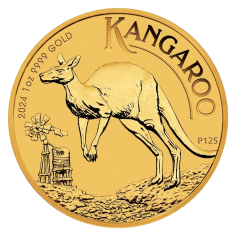
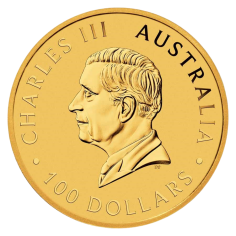
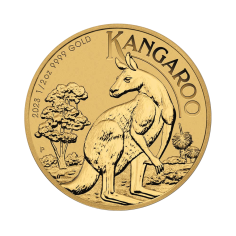
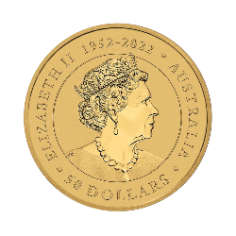
Australia ranks second on the list of countries that produce the most gold. It is no surprise that one of the oldest and most famous mints in the world was established there. Located in a colonial palace on the west coast of Australia, the Perth Mint is now a vibrant monument to the modern history of gold.
For over a century, locally mined and imported precious metals have been processed here, and gold, silver, and platinum products bearing the Perth Mint hallmark are distributed in over 100 countries. Now also through Mennica Skarbowa, which has become the official distributor of Perth Mint.
Gold rushAlthough it was the California Gold Rush that went down in history, the end of the 19th century in the Antipodes looked very similar. After rich deposits of gold were found in the Coolgardie and Kalgoorlie areas, the population of Western Australia grew from 23,000 in 1869 to 180,000 at the turn of the century. There was not enough money in local circulation for the crowds of newcomers caught up in the gold rush. The solution was simple – miners would deposit the extracted ore at the mint, which would then mint gold coins from it.
In 1896, the cornerstone for the building was laid by Sir John Forrest, known as Big John, the first premier of Western Australia. On June 20, 1899, the mint officially began operations as one of three overseas branches of the British Royal Mint. Its primary purpose was to melt gold from local mines and mint sovereigns and half-sovereigns for the British Empire.
In the service of the Empire In 1901, the Commonwealth of Australia was formed, but the Perth Mint remained under British jurisdiction until 1970, working on its behalf as required. Between 1899 and 1931, the Perth Mint struck over 106 million sovereigns and nearly 735 million half-sovereigns, which were used for trade throughout the British Empire.
In 1931, when Great Britain abandoned the gold standard, the minting of sovereigns was discontinued. For several years, the refinery and mint focused on the production of gold bars, but it did not take long for its coin minting services to be needed again. During World War II, at the request of the Empire, the Perth Mint also minted copper circulation coins. After the war, it continued to produce them for local needs until 1964.
The purest gold in the world 1957 saw the first world record. Specialists from the Perth Mint managed to obtain the purest gold in the world. The mint produced a gold plate weighing 400g and with a fineness of 999.999 (today, we most often encounter bars and coins with a fineness of 999.9, and sometimes - in special editions - with a fineness of 999.99). The British Royal Mint was so impressed that it immediately ordered a fragment of the plate for itself to use as a standard in the future.
And what is the Perth Mint famous for today? Find out next week!
Photo: Perth Mint







 (1)_LBMA.jpg)



 English
 German
 Ukrainian


 801 501 521