











 (1)_LBMA.jpg)



 English
 German
 Ukrainian

Your shopping cart
No products in the shopping cart

 801 501 521
- Author of the entry: Mennica Skarbowa
- Date of entry:
To avoid being cheated when buying physical gold, you need to start with one simple rule – there is no such thing as a bargain in this market. The price of a gold bar or bullion coin consists of the current market value of the metal it contains, production costs, and the seller's margin. Gold offered below market price either comes from criminal activity or is simply not gold.
This is increasingly being realized by customers who have decided to make a bargain purchase through an acquaintance or a quick transaction with a stranger who happens to need cash. Leaving aside the issue of stolen coins or bars, the focus should be primarily on the flood of counterfeits on the market.
Counterfeit bars can be purchased for just a few dollars, e.g., on foreign auction sites, but they are also available in Poland. Although sellers protect themselves by stating in the auction that they are selling replicas, the products they offer do not have such markings. Just as a display banknote must be additionally labeled, a fake bar or coin must also have the appropriate markings. If it does not, the entity purchasing such an item has the right to retain it and report the attempt to put counterfeits into circulation to the police.
Unfortunately, there are more and more such counterfeits, and they are of increasingly better quality. As a result, pawnshops and small gold buyers often accept such products and then sell them in good faith to other customers. This applies to both gold coins and bars, especially those in CertiCard packaging.
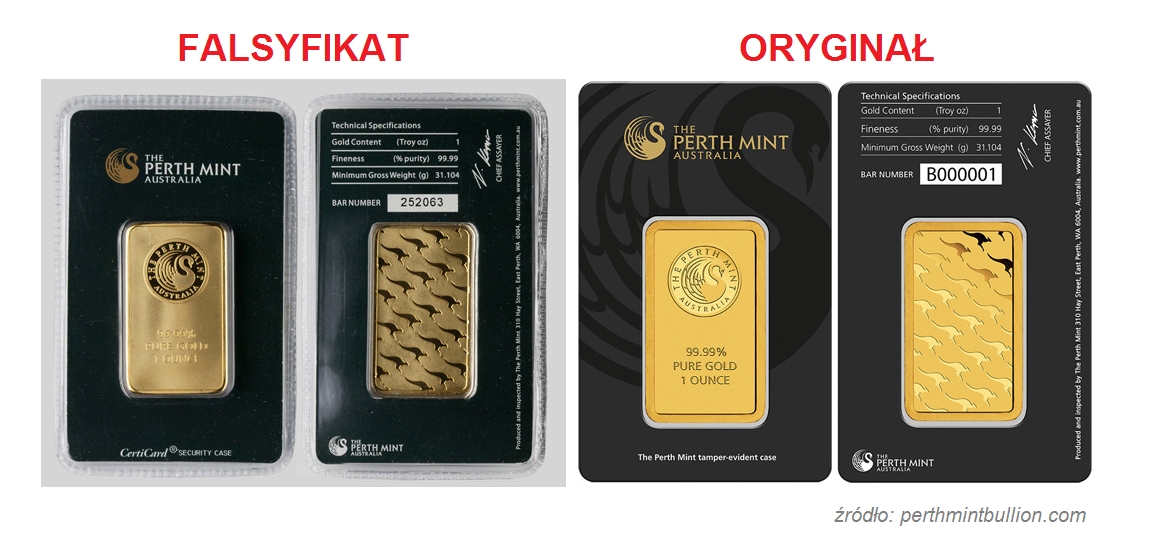
Until now, it was assumed that if a bar was packaged in a plastic certificate confirming its fineness and serial number, and the manufacturer belonged to the London Bullion Market Association (LBMA), one could blindly assume that the gold was genuine. Today, when counterfeiters specialize not only in the production of tungsten-plated gold bars, but also in packaging, the matter is much more difficult. However, customers can protect themselves from counterfeits if they exercise caution and follow a few simple rules:
- Do not buy gold from small retailers or pawn shops. Larger dealers with many years of experience and high turnover offer genuine goods directly from the manufacturer and at a better price (no middlemen and better terms due to bulk purchases).
- if you buy elsewhere, check or ask to check any suspicious bars or coins. For gold bullion coins, a mint ruler is sufficient, while for bars it is worth using a magnetic scale or spectrometer. The physical properties of gold make it not only valuable but also very distinctive. Therefore, counterfeit bars and coins will always differ from the original in one of their parameters - weight or dimensions. If they are to retain the weight of the original, they will be larger than it. If they are to retain the dimensions, they will be lighter than the original.
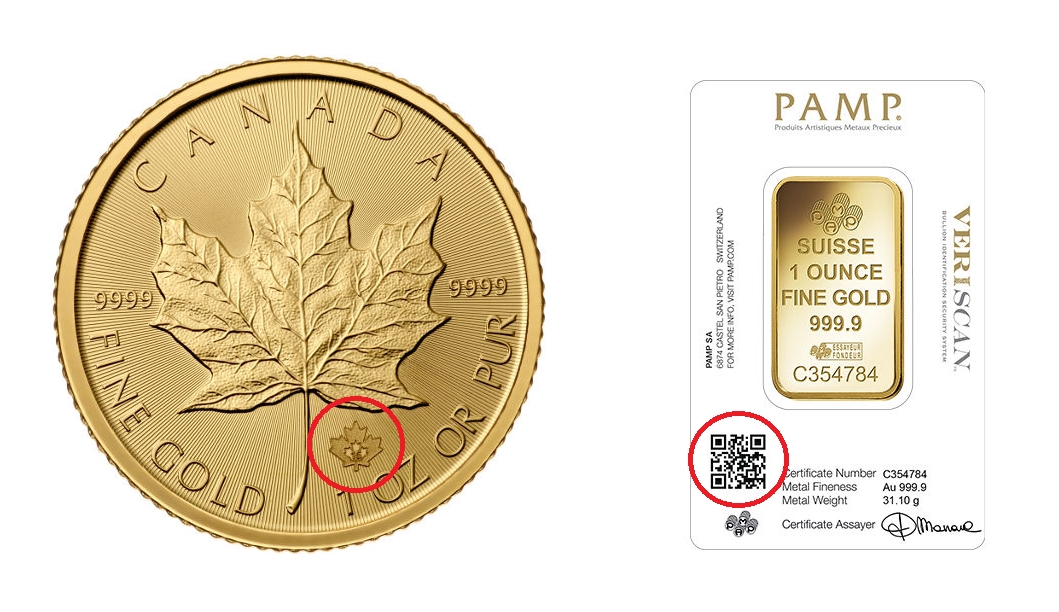
For several years now, mints around the world have been fighting against a flood of counterfeits and coming up with new security features – micro-engravings, holograms, and QR codes on packaging. All this makes newly issued products really difficult to counterfeit, but there are still thousands of tons of "old-style" gold in circulation. That is why it is worth exercising caution when buying gold, because the saying "all that glitters is not gold" is particularly relevant today.
MW
This is increasingly being realized by customers who have decided to make a bargain purchase through an acquaintance or a quick transaction with a stranger who happens to need cash. Leaving aside the issue of stolen coins or bars, the focus should be primarily on the flood of counterfeits on the market.
Counterfeit bars can be purchased for just a few dollars, e.g., on foreign auction sites, but they are also available in Poland. Although sellers protect themselves by stating in the auction that they are selling replicas, the products they offer do not have such markings. Just as a display banknote must be additionally labeled, a fake bar or coin must also have the appropriate markings. If it does not, the entity purchasing such an item has the right to retain it and report the attempt to put counterfeits into circulation to the police.
Unfortunately, there are more and more such counterfeits, and they are of increasingly better quality. As a result, pawnshops and small gold buyers often accept such products and then sell them in good faith to other customers. This applies to both gold coins and bars, especially those in CertiCard packaging.
Until now, it was assumed that if a bar was packaged in a plastic certificate confirming its fineness and serial number, and the manufacturer belonged to the London Bullion Market Association (LBMA), one could blindly assume that the gold was genuine. Today, when counterfeiters specialize not only in the production of tungsten-plated gold bars, but also in packaging, the matter is much more difficult. However, customers can protect themselves from counterfeits if they exercise caution and follow a few simple rules:
- Do not buy gold from small retailers or pawn shops. Larger dealers with many years of experience and high turnover offer genuine goods directly from the manufacturer and at a better price (no middlemen and better terms due to bulk purchases).
- if you buy elsewhere, check or ask to check any suspicious bars or coins. For gold bullion coins, a mint ruler is sufficient, while for bars it is worth using a magnetic scale or spectrometer. The physical properties of gold make it not only valuable but also very distinctive. Therefore, counterfeit bars and coins will always differ from the original in one of their parameters - weight or dimensions. If they are to retain the weight of the original, they will be larger than it. If they are to retain the dimensions, they will be lighter than the original.
For several years now, mints around the world have been fighting against a flood of counterfeits and coming up with new security features – micro-engravings, holograms, and QR codes on packaging. All this makes newly issued products really difficult to counterfeit, but there are still thousands of tons of "old-style" gold in circulation. That is why it is worth exercising caution when buying gold, because the saying "all that glitters is not gold" is particularly relevant today.
MW
