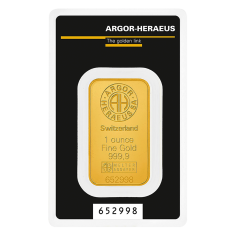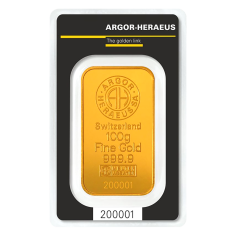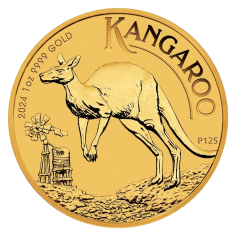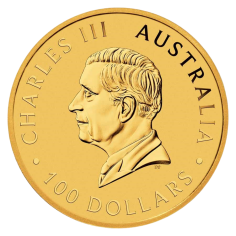
Gold is considered a safe haven asset, i.e., a safe way to invest money. The precious metal is particularly useful in situations of increased risk of financial and political crises.
Is this why 2019 can be called the year of gold? Global central banks have not purchased such large quantities of this precious metal since the 1970s as they did last year. Private investors are also increasingly willing to invest their savings in this metal. Does the behavior of global economies herald an impending crisis?
Gold reserves contribute to building the economic strength of a country and safeguard its financial security. Central banks continue to expand their gold reserves in order to secure the country's financial policy. The metal provides them with security and liquidity, and therefore remains a priority for these institutions. As gold plays an unwavering and crucial role in the global financial system, central banks should continue to expand their reserves.
2019 can be called the year of gold. Global central banks and private investors purchased record amounts of gold last year. In the year closing the last decade, central banks around the world bought a total of 668 tons of gold, which is significantly more than in 2018 (651.5 tons). (651.5 tons). Of this, 390 tons were purchased in the first two quarters of 2019, when gold prices were lower. According to statistics, this is the largest expansion of gold reserves by countries since the 1970s.
GLOBAL TREND
For some time now, we have been observing a trend in the global economy known as monetary policy easing. This is nothing more than an increase in the money supply in circulation. At the same time, central banks around the world are increasing their gold reserves. According to analysts, it was the actions taken by these institutions that significantly fueled last year's "gold rush."
According to data from the World Gold Council (WGC), Russia, China, and Turkey made significant increases to their reserves in the past year. According to estimates, central banks around the world currently hold approximately 30,000 tons of gold. The United States is the leader, boasting reserves of 8,100 tons of gold, followed by Germany with 3,400 tons, and then Italy, France, Russia, and China, each with approximately 2,000 tons of the metal.
For example, the Reserve Bank of India (RBI) increased its reserves by approximately 60 tons of bullion in 2019. This was the largest annual gold purchase made by the RBI since 2009, when the country bought 200 tons of bullion from the International Monetary Fund.
The National Bank of Poland (NBP) also expanded its gold reserves. Between 2018 and 2019, they increased by 125.7 tons and currently stand at 228.6 tons. As a result, the NBP has caught up with the global average for central banks in terms of the share of gold in foreign exchange reserves, which stands at 10.5%. This also placed Poland in 22nd place globally and 11th in Europe (which also outclasses other countries in our region) among central banks worldwide in terms of gold reserves.
According to many analysts, behavior on global markets may herald a crisis or economic slowdown. Countries clearly do not want to be caught off guard, as was the case in 2008, for example. On the other hand, the nature of a crisis is that it usually comes unexpectedly, and now everyone is insuring themselves against it... However, it is worth thinking about our savings and carefully deciding what to invest them in and how, so as not to lose their value. Here, the only correct answer is: GOLD.




 (1)_LBMA.jpg)








 English
 German
 Ukrainian


 801 501 521