


 (1)_LBMA.jpg)







 English
 German
 Ukrainian

Your shopping cart
No products in the shopping cart

 801 501 521
- Author of the entry: Mennica Skarbowa
- Date of entry:
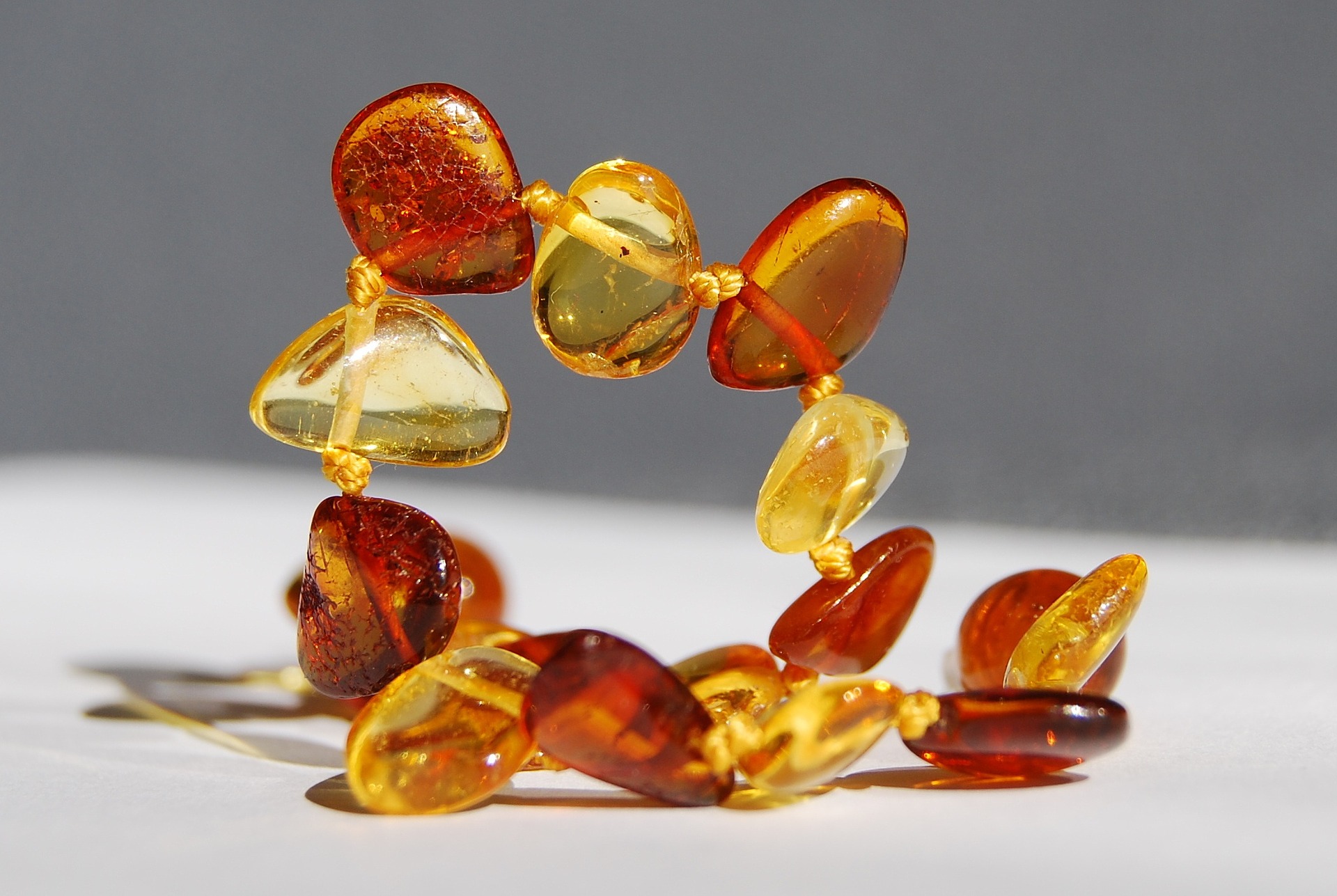
Amber is nothing more than fossilized tree resin from over 40 million years ago. It is not a stone, but like pearls and coral, it is of organic origin. What's more, amber is a "living stone." It is warm to the touch, fragrant, and constantly changing due to ongoing chemical transformations.
IT IS NOT ALWAYS YELLOW
Why do we assume that amber is yellow? In fact, Baltic amber usually has a warm, honey color, ranging from light yellow to brown, but amber can also be almost colorless, milky white, orange, red, black, and even greenish. In the Dominican Republic, there is also amber that shimmers blue in the sunlight.
THE AIR COLORS IT WHITE
Amber can be both transparent and completely opaque. The transparency of amber depends on the amount of air bubbles it contains – the fewer bubbles, the more transparent the amber, and the more bubbles, the less transparent it is. A very large number of air bubbles causes amber to turn white.
IT CAN SHINE LIKE MOTHER-OF-PEARL
Amber in its natural form is matte, so after being shaped, it is polished. After polishing, amber acquires an oily sheen, as if it were covered with wax. There are also rare varieties of amber with a silky sheen resembling mother-of-pearl.
WARM AND FRAGRANT
Amber has interesting properties: it is warm to the touch, smells nice when heated, and can be burned, so be careful with fire. It can be colored using organic and synthetic substances. It can be made more transparent or its color can be changed through heat or pressure treatment. It can also be glued together by pressing it under high temperature and high pressure or using a colorless adhesive. That is why not only natural amber but also modified amber is used in jewelry.
