



 (1)_LBMA.jpg)








 English
 German
 Ukrainian

Your shopping cart
No products in the shopping cart

 801 501 521
- Author of the entry: Mennica Skarbowa
- Date of entry:
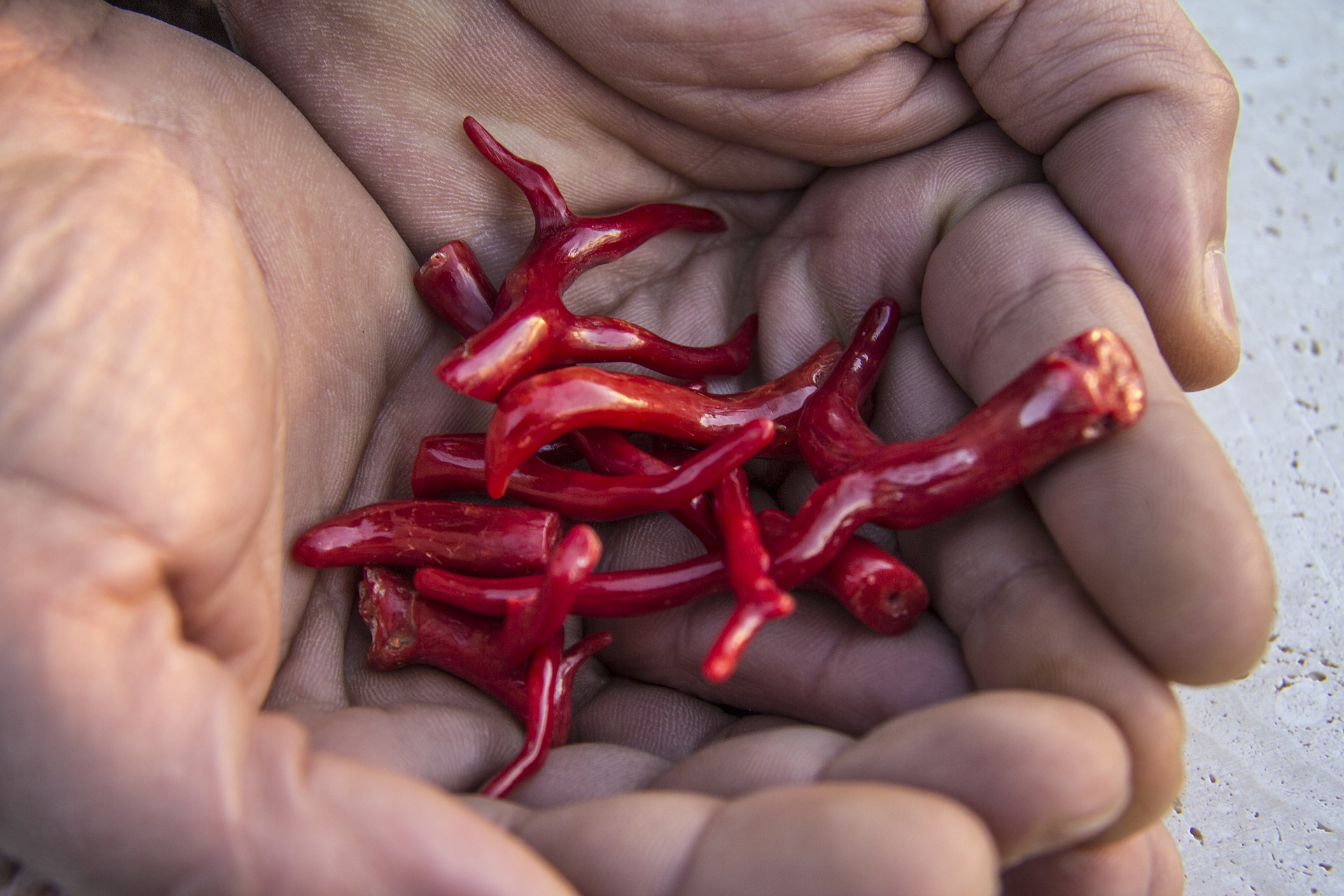
It sounds gruesome, but coral is nothing more than the skeleton of coral reefs, small marine animals that form coral reefs. Coral, like pearls, is not a stone, but an organic creation. Where does it come from and how is it used to make jewelry?
WHERE DO CORAL COME FROM?
Corals live on the sea floor, attached to rocky substrates. They are mainly found in warm seas, at shallow depths, in well-lit and oxygenated waters. Corals come in many varieties and colors. Contrary to appearances, not all of them are red. Corals can also be white, pink, red, purple, blue, black, and even gold. They also come in a wide range of shades.
So why are corals associated with the color red, and why has coral even become the name of a specific shade of red? It's simple. Colors other than red only gained popularity in the mid-20th century, which is relatively recent. Previously, only corals from the Mediterranean Sea (which are red) and then from the seas around the coast of Japan (which are also red) were used to make jewelry, so it became accepted that coral was that color.
HOW CORAL JEWELRY IS MADE
The soft parts are removed from the harvested corals. They are then processed to create individual jewelry elements. Coral is usually given a spherical, rounded, or cabochon shape. After harvesting, coral is matte. A glassy shine is achieved by polishing. Coral is most often used to make necklaces (coral beads) and bracelets, but it is also frequently used as a decorative element in rings and other jewelry.
HOW DID SEA CORALS BECOME PART OF FOLK COSTUMES?
As long as coral was only harvested from the Mediterranean Sea, it was relatively rare and therefore expensive. Everything changed when coral habitats were discovered around Japan in the mid-19th century. Japanese corals were not only suitable for jewelry making (not all corals are suitable), but were also just as good as those from the Mediterranean. The new coral habitats proved to be so abundant that their supply far exceeded demand. This made them so cheap that even rural residents could afford coral. In this way, strings of red coral became traditional jewelry and later a typical element of folk costumes, such as those of the highlanders and the Krakow region.
